THE NICKEL INDUSTRY SCANDAL
A major ecocide is underway in Indonesia, threatening the Coral Triangle at its very heart. Forest and marine ecosystems of international importance are being permanently destroyed, impacting local populations in an alarming way. It is urgent to adopt new legislation on imports of nickel - and its derivatives - into Western countries, so that Indonesia strictly enforces the law.
While the merits of electric cars and the energy transition are being praised everywhere, an ecological and human disaster is unfolding, silently, thousands of kilometers away: in Indonesia, more specifically on the island of Sulawesi.
In recent years, Indonesia has become the world's leading producer of nickel, a metal crucial to electric vehicle batteries. But at what cost? Hundreds of thousands of hectares of primary tropical forest are being destroyed, even though these forests play a vital role in fighting climate change by absorbing enormous quantities of CO₂. These forests are home to a unique, irreplaceable biodiversity that is now threatened with extinction.
That's not all: coral reefs – the planet's true blue lungs – are also dying, suffocated by sediment from the mines. These marine ecosystems, which produce much of the oxygen we breathe, are also essential carbon sinks, and they are disappearing before our eyes. We are talking here about the future of the Coral Triangle, one of the largest reservoirs of marine biodiversity on the planet.
Behind this tragedy, local populations are also suffering. Their environment is polluted, their water is unfit for consumption, their health is at risk, and their food security is collapsing.
And yet, this massive destruction only partly serves to manufacture batteries. In reality, more than 70% of the world's nickel is used to produce stainless steel. And to power these industrial complexes, it is coal plants – among the most polluting – that supply the energy.
What we are seeing here is a two-speed energy transition: clean at home, toxic elsewhere. It is an illusion of progress built on a colonial, extractivist logic. And it must stop.
We now have the means to act. The European Union has already adopted a regulation banning products linked to deforestation, such as palm oil or soy. It is time to add nickel and its derivatives to that list. It is time to demand that environmental laws in Indonesia finally be enforced.
W

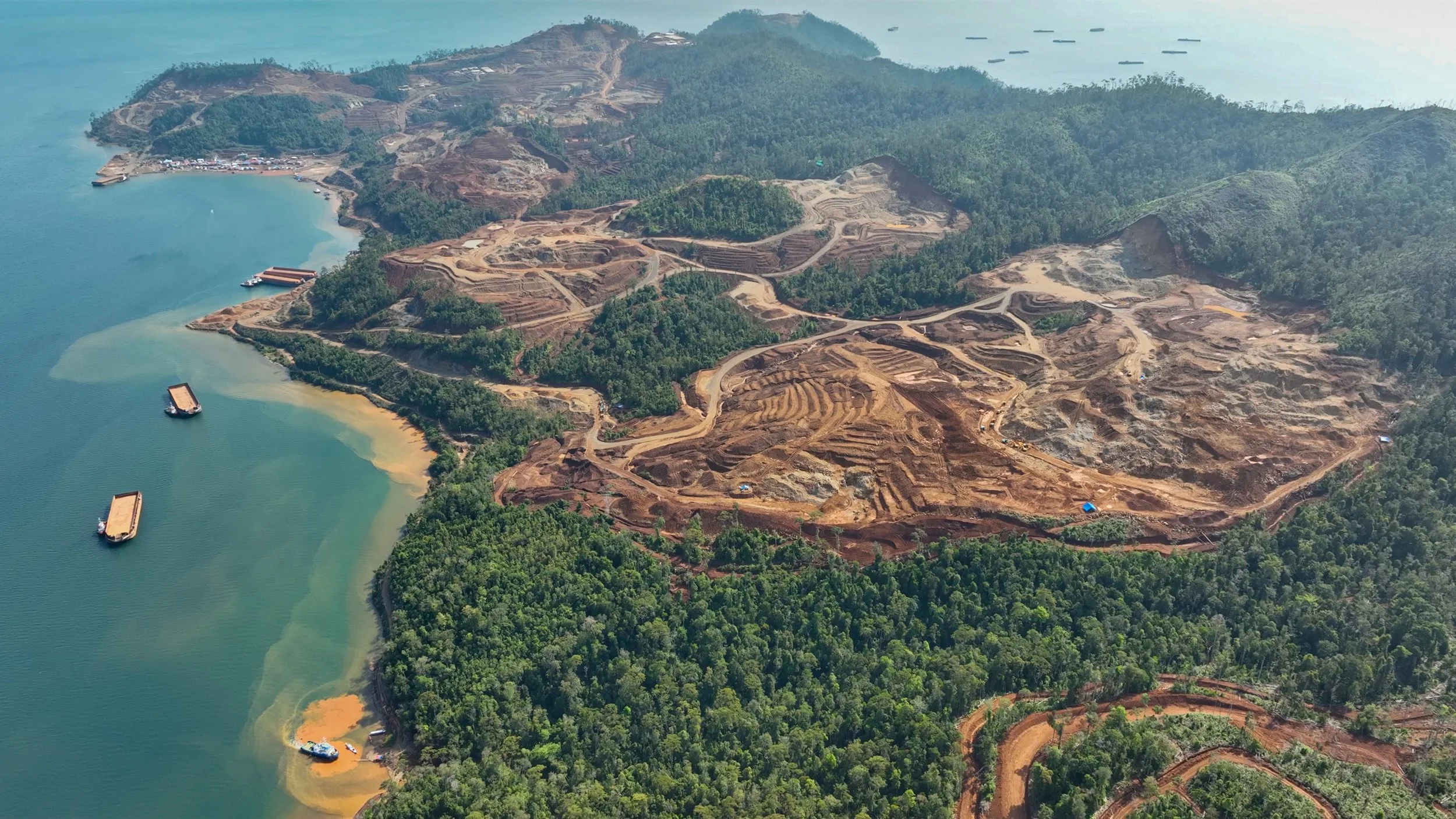
Mandiodo nickel mines (Konawe Utara / Southeast Sulawesi). In places the earth seems to bleed into the sea... even changing the color of the sea and giving it that strange greenish tint instead of the usual turquoise blue. (Source: V. Romera - HUMY NGO)
Some key facts:
* 1.1 million hectares of mining concessions (nickel only), including 654,577 ha in Sulawesi
* Ultramafic soils naturally contain numerous heavy metals: nickel, cobalt, cadmium, hexavalent chromium, lead, mercury, etc.
* Failure to enforce the standards and laws governing mining activities
* Double deforestation: primary forests in Sulawesi and Halmahera for nickel, and forests in Borneo for extracting the heavy coal used to power the plants
* Massive industrial complexes on the islands of Sulawesi and Halmahera (e.g., Indonesian Morowali Industrial Park (IMIP) - Sulawesi = an area equivalent to more than half of inner Paris)
* Failure to respect biodiversity protection zones: Marine Protected Areas, protected forests, Key Biodiversity Areas…
* Heavy-metal pollution of inland waters, marine waters, and living organisms, including fish and shellfish consumed by the local population
* Massive destruction of coral reefs at the heart of the Coral Triangle
* Violation of human rights in numerous regions
* Lack of appropriate waste treatment at industrial refining sites
* Conflicts of interest and corruption linked to the nickel industry
THE HIDDEN SIDE OF THE WESTERN ENERGY TRANSITION
Nickel is used in the manufacture of electric vehicle batteries. This material is now extracted mainly in Indonesia, which has been the world leader in its production since 2018.
While the island of Halmahera, in North Maluku, and its extraction project run by the French mining company Eramet, has recently been the subject of several articles in various media outlets (Mediapart, Le Monde, Vakita…), Sulawesi is in fact the Indonesian territory most threatened today by nickel mining. Indeed, according to data from the ESDM (Indonesia's Ministry of Mines), 69% of the mining concession areas authorized for exploration and production in Indonesia were located in Sulawesi in 2020, i.e. 587,128.1 hectares. In the province of Southeast Sulawesi alone (the island's southeastern branch), where Naturevolution Indonesia operates, the concessions granted for nickel extraction cover 265,744.3 hectares.
The vast majority of these areas involve primary tropical forests that play an essential role in absorbing CO2 and combating climate change. Some involve exceptional, still unexplored ecosystems, thereby potentially threatening species not yet described by science.
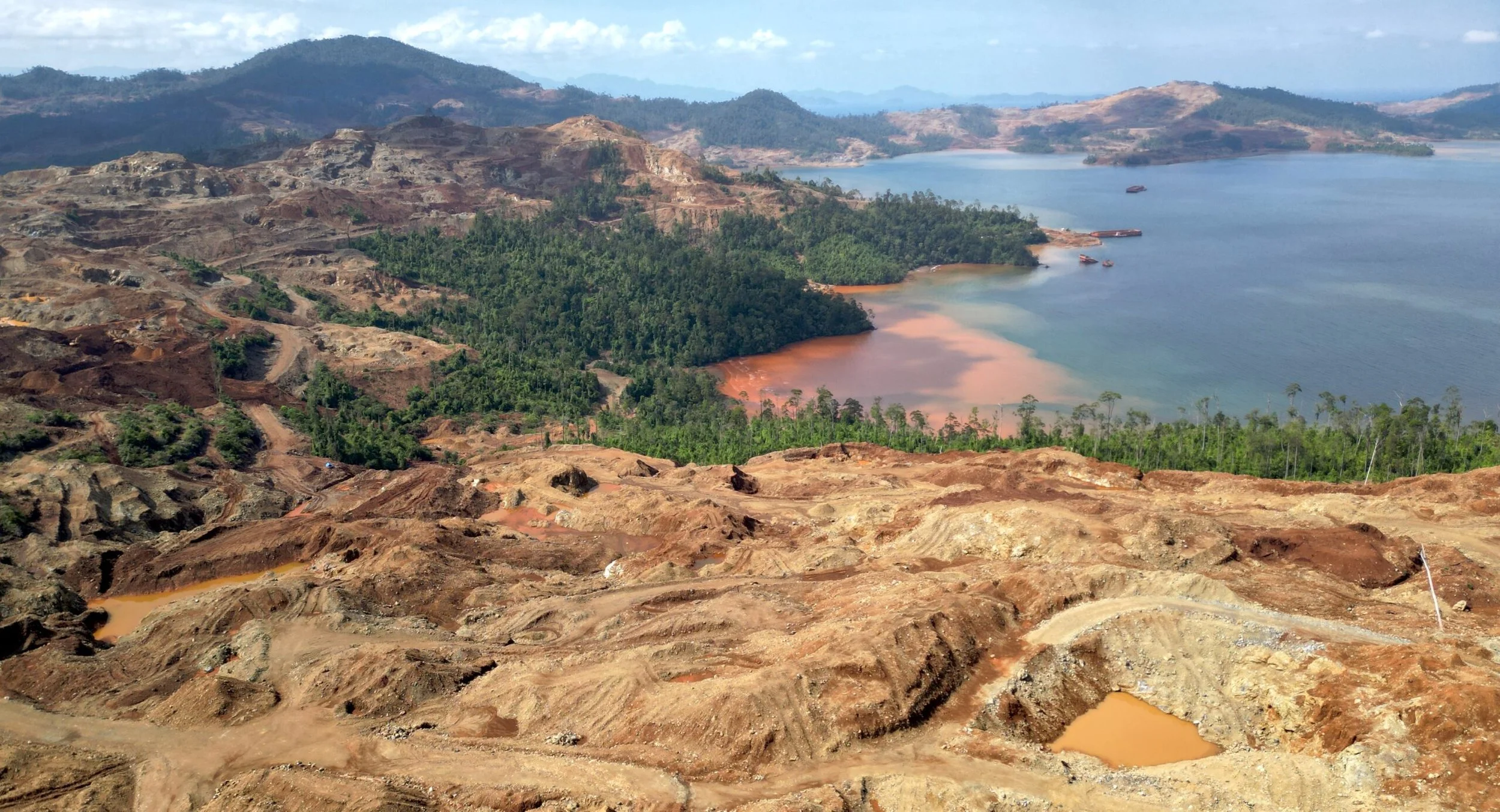
Morombo Mines (Konawe - Sulawesi Tenggara). Source : Riza Salman - Mongabay
In early 2024, Indonesian state authorities granted new IUPs (mining concessions) for nickel extraction in Sulawesi, but information remains difficult to obtain… At the very least, we know that these new concessions cover an additional 67,449.7 hectares in the north of Southeast Sulawesi province alone, bringing the current area allocated to nickel mining concessions for this province alone to 333,194 hectares (equivalent to the area of the Rhône department)!
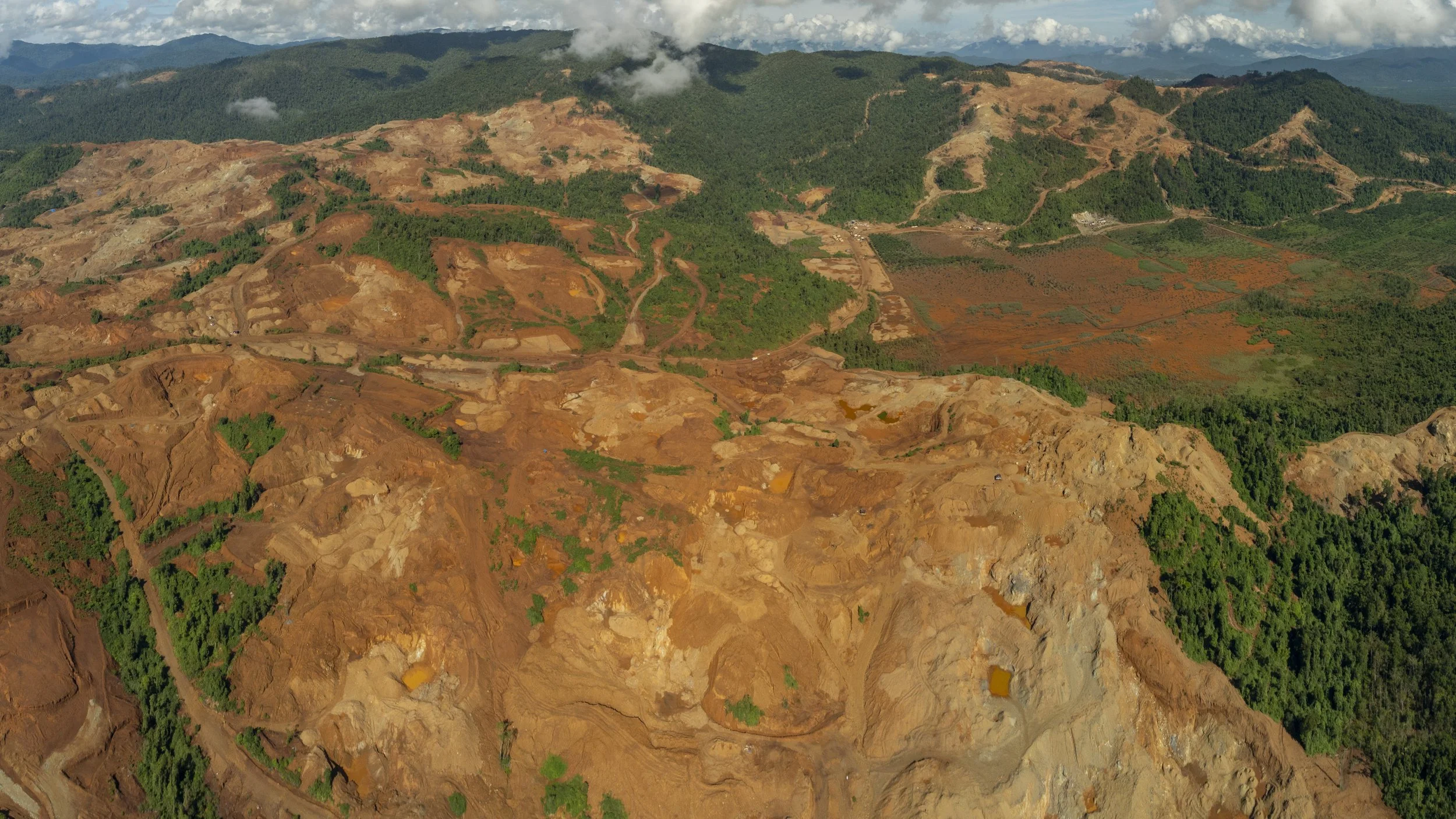
Mine de Mandiodo (Konawe - Sulawesi Tenggara). Source : V. Romera - HUMY NGO
HEAVY METALLURGICAL INDUSTRY IN THE BACKGROUND
The vast majority of nickel production is actually used to produce stainless steel, global demand for which has grown exponentially over the past few decades. However, producing stainless steel also requires extracting iron ore.
Concessions dedicated to this extraction in Indonesia covered 756,276 hectares in 2020. In total, the nickel industry (batteries + stainless steel) has therefore been granted 1.6 million hectares of mining concessions. At the COP16 biodiversity summit in Cali, the director of Auriga Nusantara presented even more recent figures. As of October 2024, mining concessions (for nickel alone) authorized by the Jakarta government exceeded 1.1 million hectares!
To these legal areas must be added a database of concessions cancelled by the ESDM but still registered with the Ministry of Environment and Forestry (KLHK). According to an anonymous source, this database of old IUPs allegedly serves the interests of illegal mining activity in Sulawesi.
Western political discourse in favor of electric vehicles strongly encourages investment in the nickel industry under the guise of the energy transition, but it is actually the heavy metallurgical industry that massively benefits from these funds. According to the NGO AEER, <cite index="0-1,0-2">foreign direct investment (FDI) has accelerated the rapid growth of Indonesia's nickel processing industry, and nickel-producing provinces have become the main targets of FDI in Indonesia over the past decade.</cite> Between 2015 and 2022, FDI amounts reached US$18.6 billion in Central Sulawesi, US$11.9 billion in North Maluku (Halmahera), and US$6.6 billion in Southeast Sulawesi. In 2022, Tesla, Elon Musk's company, injected more than $5 billion into Indonesian nickel mines and industrial complexes.
COLLATERAL DAMAGE
Toxic waste from nickel refining
The other side of the ecocide caused by the nickel industry is linked to ore refining. Previously largely refined in China, Indonesia has banned raw nickel exports since 2018. Since then, players and industries in the sector have poured massive amounts of money into refining and processing plants directly in Indonesia. In Central Sulawesi, the Indonesian Morowali Industrial Park (IMIP) has thus become the largest nickel refining and processing complex in the world. This industrial giant has several seaports and an airport, its area equivalent to more than half of inner Paris, and it is constantly expanding.
The highly toxic waste linked to the various refining processes amounts to several tens of millions of tons per year; in 2020, IMIP planned to produce more than 25 million tons of toxic sludge for the production of so-called "class 1" nickel alone – the type widely used in batteries. This results from the refining process known as "High Pressure Acid Leaching" (HPAL), which produces a very large amount of highly toxic liquid waste containing particularly dangerous elements such as hexavalent chromium, cadmium, arsenic, and sulfuric acid.
To "eliminate" this sludge, the easiest solution is "Deep Sea Tailings Disposal" (DSTD), which simply consists of dumping everything directly into the sea above a deep-sea trench. IMIP has thus built a pipeline to discharge tens of millions of tons of waste into an ocean trench 1,500 meters deep.
Officiellement, l’Indonésie a rendu illégale cette pratique dévastatrice pour l’environnement, et l’IMIP aurait dû stopper cela. Mais dans les faits ce pipeline existe bel et bien, et les bassins de stockage de boues toxiques visibles sur les images satellites du site industriel apparaissent dérisoires. Où passent donc les dizaines de millions de tonnes de boues toxiques produites chaque année à IMIP ? Malgré une augmentation considérable ces dernières années du parc de production HPAL et son extension toujours en cours (plusieurs sites HPAL actuellement en construction), cette question reste sans réponse… À la question « le site IMIP utilise-t-il le pipeline existant pour pratiquer le DSTD ? » un haut responsable de IMIP a répondu « Joker, le sujet est trop dangereux… vous voulez savoir si oui ou non le pipeline est utilisé ? Organisez une plongée là-bas… ».
Heavy coal-fired power plants
To supply this industry with electricity, heavy coal-fired power plants (Coal-Fired Power Plants, or CFPPs) are present in large numbers within this industrial complex and at all the country's other refining sites. For IMIP's operations alone, close to 9 million tons of heavy coal are reportedly burned each year, and two more CFPPs are currently under construction on the site. The coal used by Sulawesi's CFPPs is of very poor quality, and its combustion produces enormous amounts of sulfur dioxide (SO2), a particularly dangerous gas. One American researcher even suggests that burning this coal releases radioactive residues in the smoke (this information is unverified but worth mentioning). This heavy coal comes from surface deposits on the neighboring island of Borneo, where it is extracted following massive deforestation of primary forests (likely tens of thousands of hectares per year). The pollution generated by this industry, partly financed by investments tied to the energy transition, is beyond comprehension.
THE MOROSI NICKEL PROCESSING FACILITY
Not far from the city of Kendari, in Southeast Sulawesi, lies a complex smaller than IMIP: the Morosi nickel processing facility. This site is located in a vast wetland and houses two refining plants: Virtue Dragon Nickel Industry (VDNI) and Obsidian Stainless Steel (OSS). VDNI produces ferronickel and Nickel Pig Iron for stainless steel manufacturing. This site has its own coal-fired power plant made up of 8 units with a total capacity of 530 MW, consuming an estimated 400,000 tons of heavy coal per year. OSS is a huge nickel smelter producing stainless steel and "nickel matte" (used in particular for EV battery production). Outside of IMIP, its production capacity makes it one of the strategic sites of the nickel industry in Sulawesi. To power this plant's blast furnaces, OSS built a coal-fired power plant on the coast 7km from the smelters. This gigantic CFPP has a production capacity of 1,820 MW (1.82GW!), with consumption likely on the order of 1.5 million tons of heavy coal per year. In this area, ecosystems have been devastated… and local populations continue farming and raising fish and shrimp, sometimes less than 1 km from the plants.
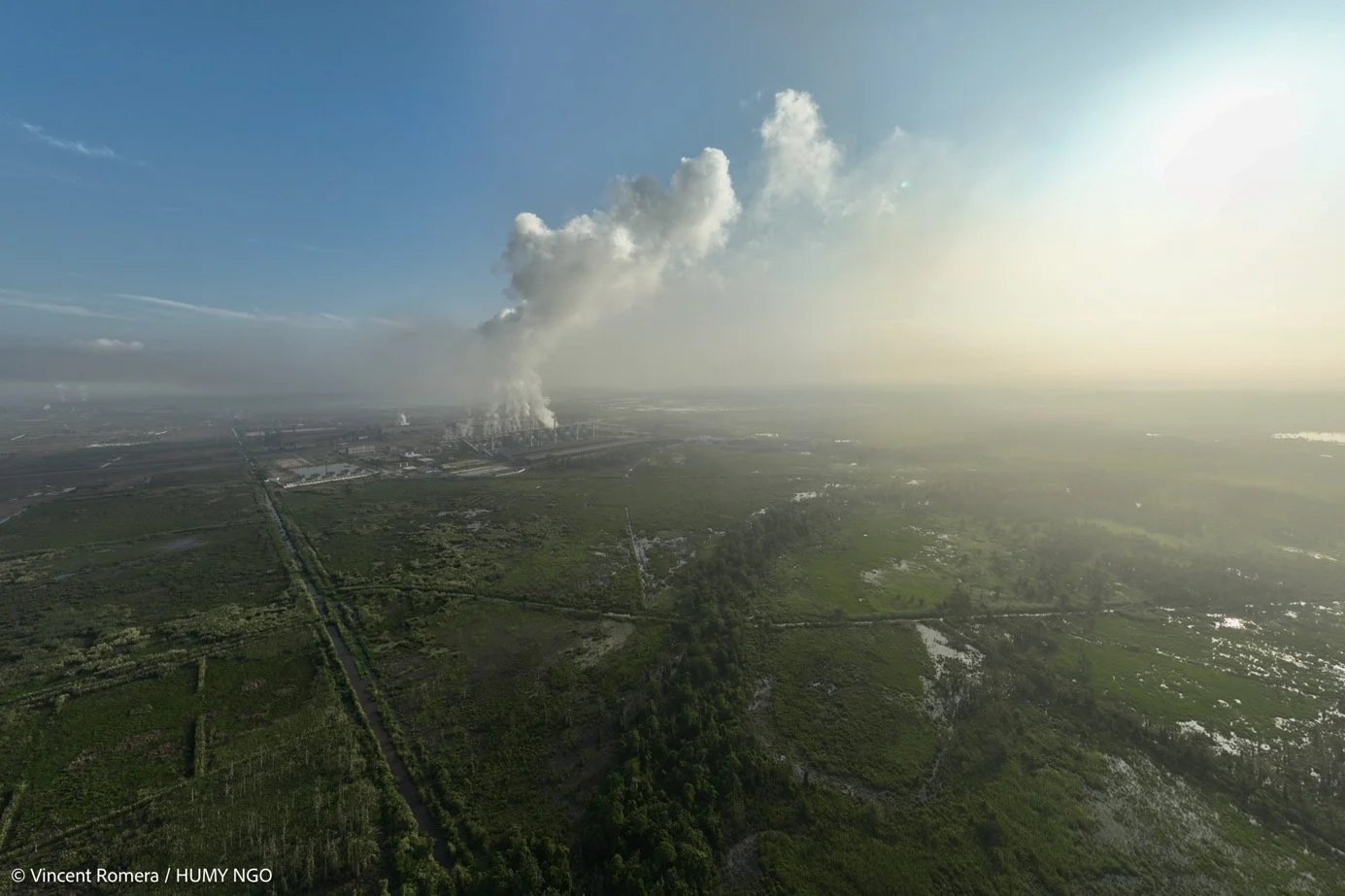
Virtue Dragon Nickel Industry (VDNI)

Centrale thermique de OSS

Obsidian Stainless Steel (OSS)
A MAJOR ECOCIDE
In addition to the net loss of biodiversity caused by the destruction of some of the richest forest ecosystems on the planet, freshwater aquatic ecosystems (rivers) as well as marine ecosystems are also being destroyed.
Indeed, the mines do not comply with current legislation, which prohibits mining along waterways and within 100 m of the coastline.
The consequences are catastrophic, with soil erosion and runoff causing pollution and the destruction of coral reefs and marine habitats along the coasts. In the Konawe and North Konawe region, over dozens upon dozens of kilometers of coastline, reefs are being smothered under sediment, with the deposit layer sometimes exceeding 1 meter in thickness. Local residents report that there are almost no fish left.

Boenaga mining sector (North Konawe / Southeast Sulawesi). In this area, despite its marine protected area status, nearly all marine life has been wiped out. Local communities, like the ecosystems, are suffering.


The bear cuscus (Ailurops ursinus) and the Knobbed hornbill (Rhyticeros cassidix) are two species endemic to Sulawesi classified as "Vulnerable" by the IUCN; both are threatened by the destruction of their natural habitat: tropical rainforest.
This ecocide is therefore destroying several major carbon sinks; tropical forests and coral reefs - a hectare of healthy coral reef having an annual carbon storage capacity roughly equivalent to two-thirds of the storage capacity of a hectare of Amazon rainforest…
- in Sulawesi and the Moluccas archipelago, through the destruction of primary forests for ore extraction,
- in Borneo, through the destruction of primary forests for extracting the heavy coal needed to generate electricity for the dozens of refineries,
- in Sulawesi, the Moluccas, and more recently in the Raja Ampat and Flores archipelagos, through the destruction of coral reefs caused by sediment from the mines.


Massive sedimentation along the eastern coasts of Southeast Sulawesi - North Konawe. Sediment laden with heavy metals settles onto corals and sponges, leading, sooner or later, to the total destruction of the reefs.
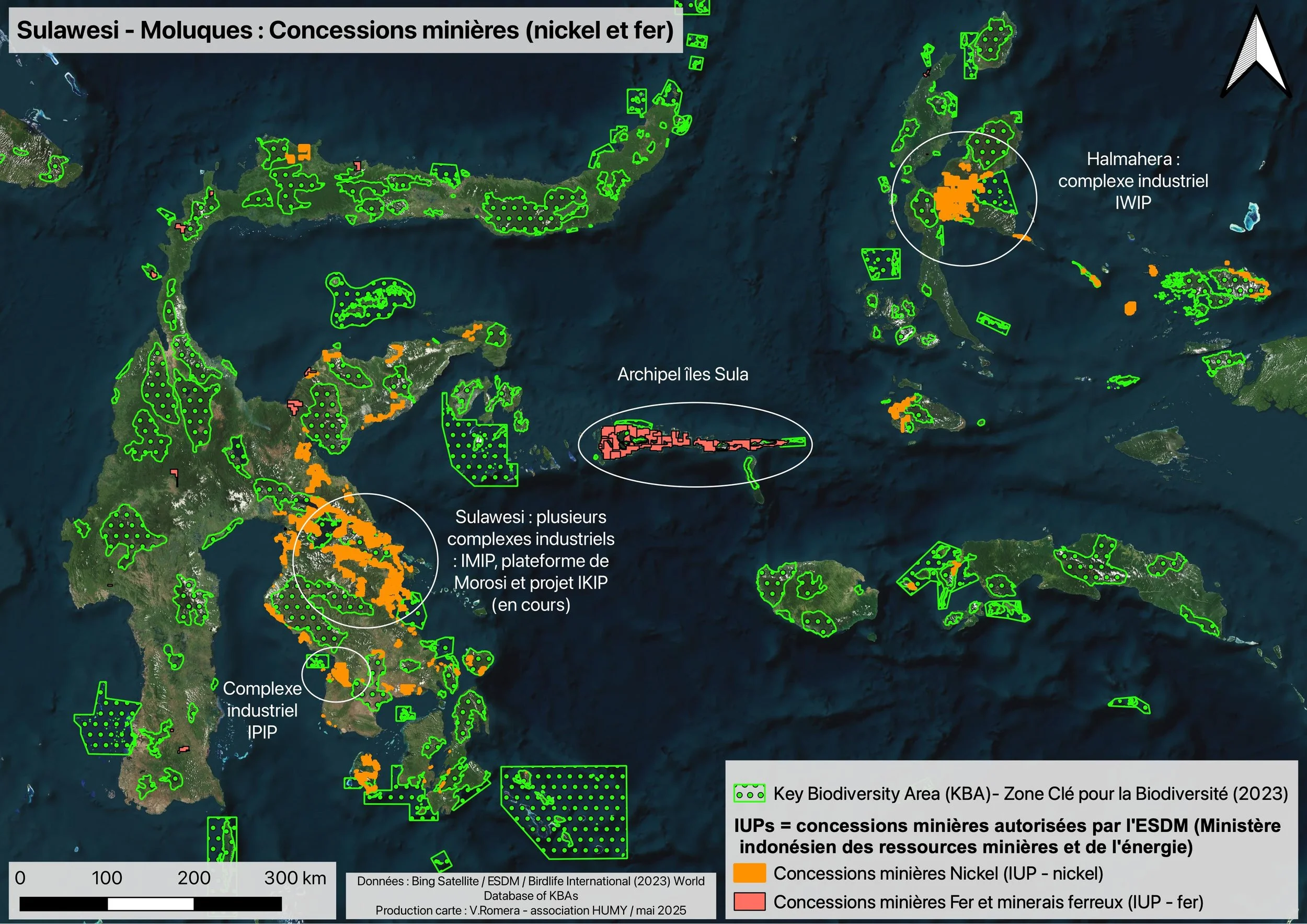
The islands of Halmahera and Sulawesi account for nearly all of Indonesia's nickel production. The Sula Islands archipelago is almost entirely covered by mining concessions dedicated to iron ore extraction. This archipelago is home to a great many strictly endemic and rare species. Sula's IUPs appear ideally positioned midway between the two main nickel sources, likely to supply the stainless steel industry.
TOWARD A EUROPEAN MORATORIUM
The West bears a large share of responsibility for the environmental and human tragedy currently unfolding on the other side of the world. Indeed, the major ecocide generated in Indonesia by nickel production is partly subsidized by European investments in a supposedly more "eco-responsible" mobility. Given the current conditions under which this "critical metal" is produced, it is no longer possible to view electric vehicles as the miracle solution to the necessary environmental transition.
Civil society must be made aware of the hidden side of this transition, and of the ecological and human price to be paid to move away from an economic model enslaved to fossil fuels, if we continue down this path.
Following the example of what the European Union recently put in place with legislation on imports of tropical products linked to deforestation (palm oil, coffee, etc.), it is now urgent to also legislate on nickel, in order to control supply chains and encourage the adoption of better environmental practices.
A moratorium on imports of nickel and its derivatives (stainless steel and batteries), requiring that supply chains meet strict environmental standards and be monitored, is more than necessary.
Unfortunately, this will not save the primary forests of Sulawesi and the Moluccas, but it could significantly reduce the impacts of this ecocidal industry by encouraging the enforcement of existing Indonesian legislation.
Mentions légales
Conformément aux dispositions de l'article 6 III 1° de la loi n°2004‑575 du 21 juin 2004 pour la confiance dans l'économie numérique, nous vous informons que :
Le présent site est un support de communication officiel d'HUMY, association déclarée au capital de 0 euro, immatriculée au sous le numéro 513 451 245 et dont le siège social est situé au 2 Rue Des Noisetiers - 95280 Jouy‑Le‑Moutier (téléphone : 01 30 38 10 74, email : contact@humy.org).
Le directeur de la publication du site est Jean‑Marc Civière, Co‑fondateur de l'association.
Le prestataire assurant l'hébergement est Squarespace, inc.., société dont le siège social est situé à 225 Varick Street; New York, États-Unis (site Internet : www.squarespace.com).
L'ensemble des contenus de ce site Internet est protégé par des droits de propriété intellectuelle. La reproduction, totale ou partielle, est strictement interdite sans autorisation préalable.
Crédits photos : ©Vincent Romera, ©Humy, ©Naturevolution, ©Riza Salman - Mongabay Indonesia