
THE NICKEL INDUSTRY SCANDAL
AFFECTED ECOSYSTEMS
A major ecocide is underway in Indonesia, threatening the Coral Triangle at its very heart. Forest and marine ecosystems of international importance are being permanently destroyed, impacting local populations in an alarming way. It is urgent to adopt new legislation on imports of nickel - and its derivatives - into Western countries, so that Indonesia strictly enforces the law.
While the merits of electric cars and the energy transition are being praised everywhere, an ecological and human disaster is unfolding, silently, thousands of kilometers away: in Indonesia, more specifically on the island of Sulawesi.
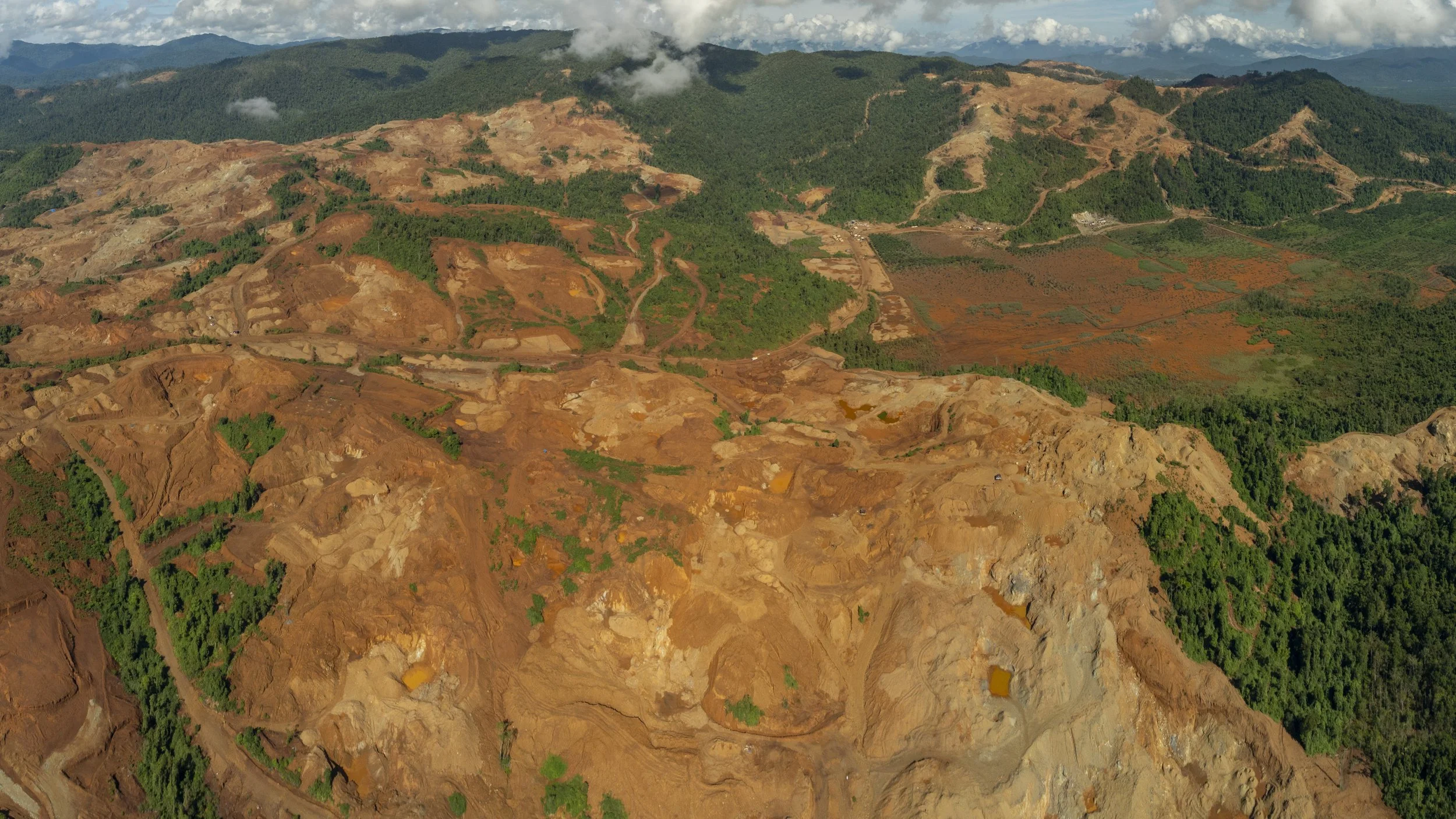
In recent years, Indonesia has become the world's leading producer of nickel, a metal crucial to electric vehicle batteries. But at what cost? Hundreds of thousands of hectares of primary tropical forest are being destroyed, even though these forests play a vital role in fighting climate change by absorbing enormous quantities of CO₂. These forests are home to a unique, irreplaceable biodiversity that is now threatened with extinction.
That's not all: coral reefs – the planet's true blue lungs – are also dying, suffocated by sediment from the mines. These marine ecosystems, which produce much of the oxygen we breathe, are also essential carbon sinks, and they are disappearing before our eyes. We are talking here about the future of the Coral Triangle, one of the largest reservoirs of marine biodiversity on the planet.
Behind this tragedy, local populations are also suffering. Their environment is polluted, their water is unfit for consumption, their health is at risk, and their food security is collapsing.
And yet, this massive destruction only partly serves to manufacture batteries. In reality, more than 70% of the world's nickel is used to produce stainless steel. And to power these industrial complexes, it is coal plants – among the most polluting – that supply the energy.
What we are seeing here is a two-speed energy transition: clean at home, toxic elsewhere. It is an illusion of progress built on a colonial, extractivist logic. And it must stop.
We now have the means to act. The European Union has already adopted a regulation banning products linked to deforestation, such as palm oil or soy. It is time to add nickel and its derivatives to that list. It is time to demand that environmental laws in Indonesia finally be enforced.

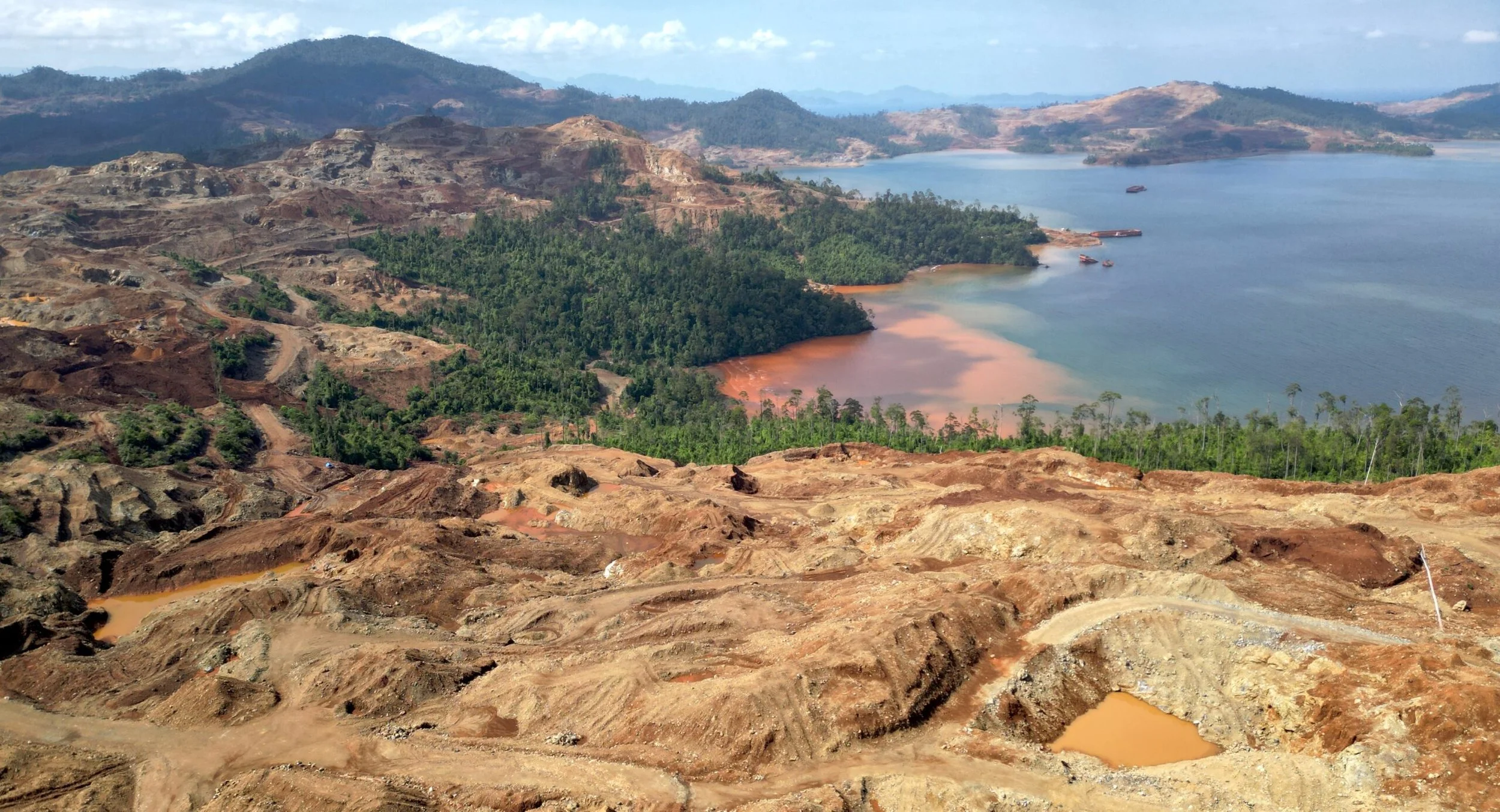
Mandiodo nickel mines (Konawe Utara / Southeast Sulawesi). In places the earth seems to bleed into the sea... even changing the color of the sea and giving it that strange greenish tint instead of the usual turquoise blue. (Source: V. Romera - HUMY NGO)
Some key facts:
* 1.1 million hectares of mining concessions (nickel only), including 654,577 ha in Sulawesi
* Ultramafic soils naturally contain numerous heavy metals: nickel, cobalt, cadmium, hexavalent chromium, lead, mercury, etc.
* Failure to enforce the standards and laws governing mining activities
* Double deforestation: primary forests in Sulawesi and Halmahera for nickel, and forests in Borneo for extracting the heavy coal used to power the plants
* Massive industrial complexes on the islands of Sulawesi and Halmahera (e.g., Indonesian Morowali Industrial Park (IMIP) - Sulawesi = an area equivalent to more than half of inner Paris)
* Failure to respect biodiversity protection zones: Marine Protected Areas, protected forests, Key Biodiversity Areas…
* Heavy-metal pollution of inland waters, marine waters, and living organisms, including fish and shellfish consumed by the local population
* Massive destruction of coral reefs at the heart of the Coral Triangle
* Violation of human rights in numerous regions
* Lack of appropriate waste treatment at industrial refining sites
* Conflicts of interest and corruption linked to the nickel industry
THE HIDDEN SIDE OF THE WESTERN ENERGY TRANSITION
Nickel is used in the manufacture of electric vehicle batteries. This material is now extracted mainly in Indonesia, which has been the world leader in its production since 2018.
While the island of Halmahera, in North Maluku, and its extraction project run by the French mining company Eramet, has recently been the subject of several articles in various media outlets (Mediapart, Le Monde, Vakita…), Sulawesi is in fact the Indonesian territory most threatened today by nickel mining. Indeed, according to data from the ESDM (Indonesia's Ministry of Mines), 69% of the mining concession areas authorized for exploration and production in Indonesia were located in Sulawesi in 2020, i.e. 587,128.1 hectares. In the province of Southeast Sulawesi alone (the island's southeastern branch), where Naturevolution Indonesia operates, the concessions granted for nickel extraction cover 265,744.3 hectares.
HEAVY METALLURGICAL INDUSTRY IN THE BACKGROUND
The vast majority of nickel production is actually used to produce stainless steel, global demand for which has grown exponentially over the past few decades. However, producing stainless steel also requires extracting iron ore.
Concessions dedicated to this extraction in Indonesia covered 756,276 hectares in 2020. In total, the nickel industry (batteries + stainless steel) has therefore been granted 1.6 million hectares of mining concessions. At the COP16 biodiversity summit in Cali, the director of Auriga Nusantara presented even more recent figures. As of October 2024, mining concessions (for nickel alone) authorized by the Jakarta government exceeded 1.1 million hectares!
To these legal areas must be added a database of concessions cancelled by the ESDM but still registered with the Ministry of Environment and Forestry (KLHK). According to an anonymous source, this database of old IUPs allegedly serves the interests of illegal mining activity in Sulawesi.
Western political discourse in favor of electric vehicles strongly encourages investment in the nickel industry under the guise of the energy transition, but it is actually the heavy metallurgical industry that massively benefits from these funds. According to the NGO AEER, <cite index="0-1,0-2">foreign direct investment (FDI) has accelerated the rapid growth of Indonesia's nickel processing industry, and nickel-producing provinces have become the main targets of FDI in Indonesia over the past decade.</cite> Between 2015 and 2022, FDI amounts reached US$18.6 billion in Central Sulawesi, US$11.9 billion in North Maluku (Halmahera), and US$6.6 billion in Southeast Sulawesi. In 2022, Tesla, Elon Musk's company, injected more than $5 billion into Indonesian nickel mines and industrial complexes.


The vast majority of these areas involve primary tropical forests that play an essential role in absorbing CO2 and combating climate change. Some involve exceptional, still unexplored ecosystems, thereby potentially threatening species not yet described by science.
Obsidian Stainless Steel (OSS)
Morombo mines (Konawe - Sulawesi Tenggara). Source : Riza Salman - Mongabay
In early 2024, Indonesian state authorities granted new IUPs (mining concessions) for nickel extraction in Sulawesi, but information remains difficult to obtain… At the very least, we know that these new concessions cover an additional 67,449.7 hectares in the north of Southeast Sulawesi province alone, bringing the current area allocated to nickel mining concessions for this province alone to 333,194 hectares (equivalent to the area of the Rhône department)!
COLLATERAL DAMAGE
Toxic waste from nickel refining
The other side of the ecocide caused by the nickel industry is linked to ore refining. Previously largely refined in China, Indonesia has banned raw nickel exports since 2018. Since then, players and industries in the sector have poured massive amounts of money into refining and processing plants directly in Indonesia. In Central Sulawesi, the Indonesian Morowali Industrial Park (IMIP) has thus become the largest nickel refining and processing complex in the world. This industrial giant has several seaports and an airport, its area equivalent to more than half of inner Paris, and it is constantly expanding.
The highly toxic waste linked to the various refining processes amounts to several tens of millions of tons per year; in 2020, IMIP planned to produce more than 25 million tons of toxic sludge for the production of so-called "class 1" nickel alone – the type widely used in batteries. This results from the refining process known as "High Pressure Acid Leaching" (HPAL), which produces a very large amount of highly toxic liquid waste containing particularly dangerous elements such as hexavalent chromium, cadmium, arsenic, and sulfuric acid.
To "eliminate" this sludge, the easiest solution is "Deep Sea Tailings Disposal" (DSTD), which simply consists of dumping everything directly into the sea above a deep-sea trench. IMIP has thus built a pipeline to discharge tens of millions of tons of waste into an ocean trench 1,500 meters deep.
Heavy coal-fired power plants
To supply this industry with electricity, heavy coal-fired power plants (Coal-Fired Power Plants, or CFPPs) are present in large numbers within this industrial complex and at all the country's other refining sites. For IMIP's operations alone, close to 9 million tons of heavy coal are reportedly burned each year, and two more CFPPs are currently under construction on the site. The coal used by Sulawesi's CFPPs is of very poor quality, and its combustion produces enormous amounts of sulfur dioxide (SO2), a particularly dangerous gas. One American researcher even suggests that burning this coal releases radioactive residues in the smoke (this information is unverified but worth mentioning). This heavy coal comes from surface deposits on the neighboring island of Borneo, where it is extracted following massive deforestation of primary forests (likely tens of thousands of hectares per year). The pollution generated by this industry, partly financed by investments tied to the energy transition, is beyond comprehension.
THE MOROSI NICKEL PROCESSING FACILITY
Not far from the city of Kendari, in Southeast Sulawesi, lies a complex smaller than IMIP: the Morosi nickel processing facility. This site is located in a vast wetland and houses two refining plants: Virtue Dragon Nickel Industry (VDNI) and Obsidian Stainless Steel (OSS). VDNI produces ferronickel and Nickel Pig Iron for stainless steel manufacturing. This site has its own coal-fired power plant made up of 8 units with a total capacity of 530 MW, consuming an estimated 400,000 tons of heavy coal per year. OSS is a huge nickel smelter producing stainless steel and "nickel matte" (used in particular for EV battery production). Outside of IMIP, its production capacity makes it one of the strategic sites of the nickel industry in Sulawesi. To power this plant's blast furnaces, OSS built a coal-fired power plant on the coast 7km from the smelters. This gigantic CFPP has a production capacity of 1,820 MW (1.82GW!), with consumption likely on the order of 1.5 million tons of heavy coal per year. In this area, ecosystems have been devastated… and local populations continue farming and raising fish and shrimp, sometimes less than 1 km from the plants.
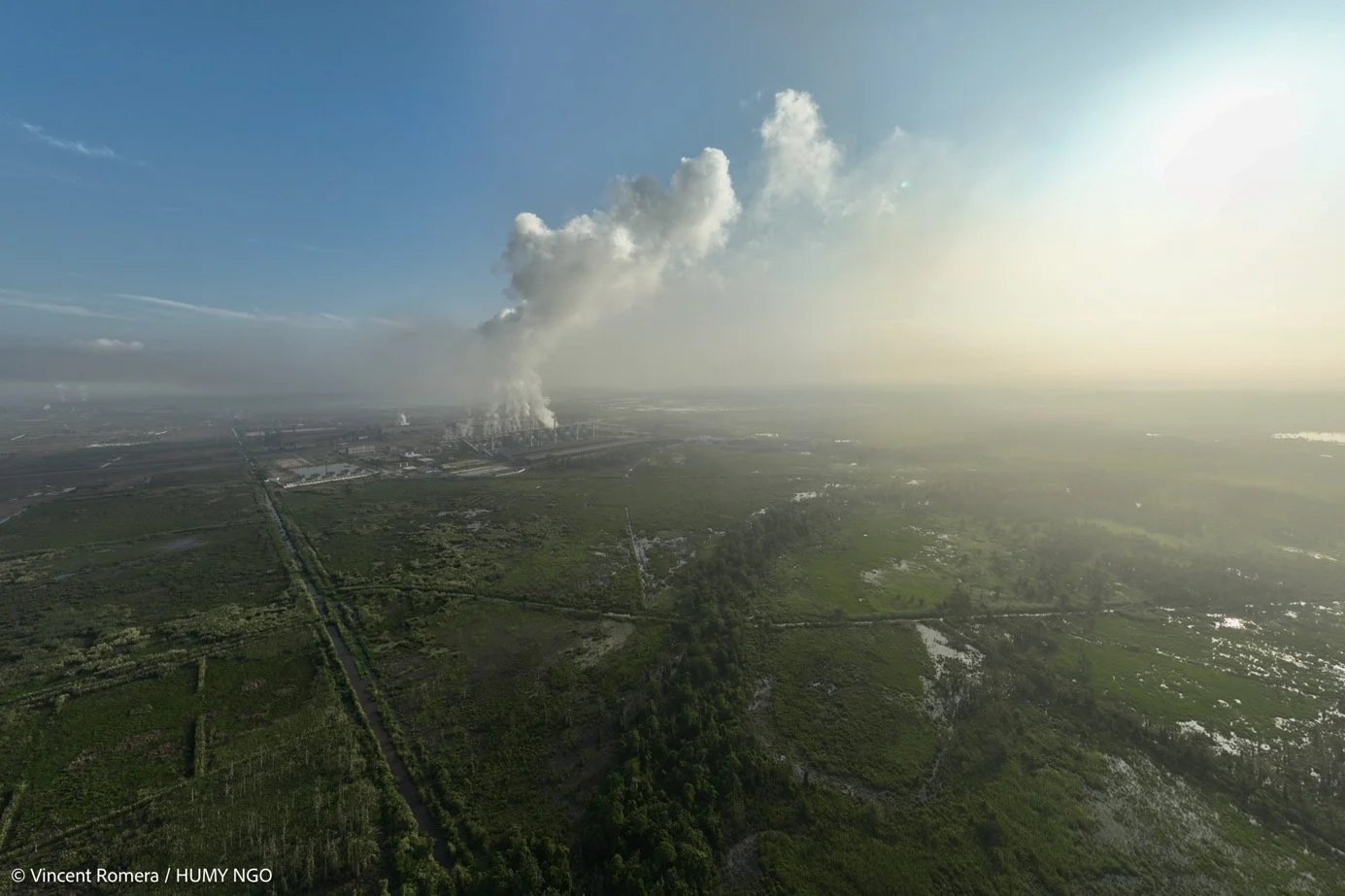
Virtue Dragon Nickel Industry (VDNI)
A MAJOR ECOCIDE
In addition to the net loss of biodiversity caused by the destruction of some of the richest forest ecosystems on the planet, freshwater aquatic ecosystems (rivers) as well as marine ecosystems are also being destroyed.
Indeed, the mines do not comply with current legislation, which prohibits mining along waterways and within 100 m of the coastline.
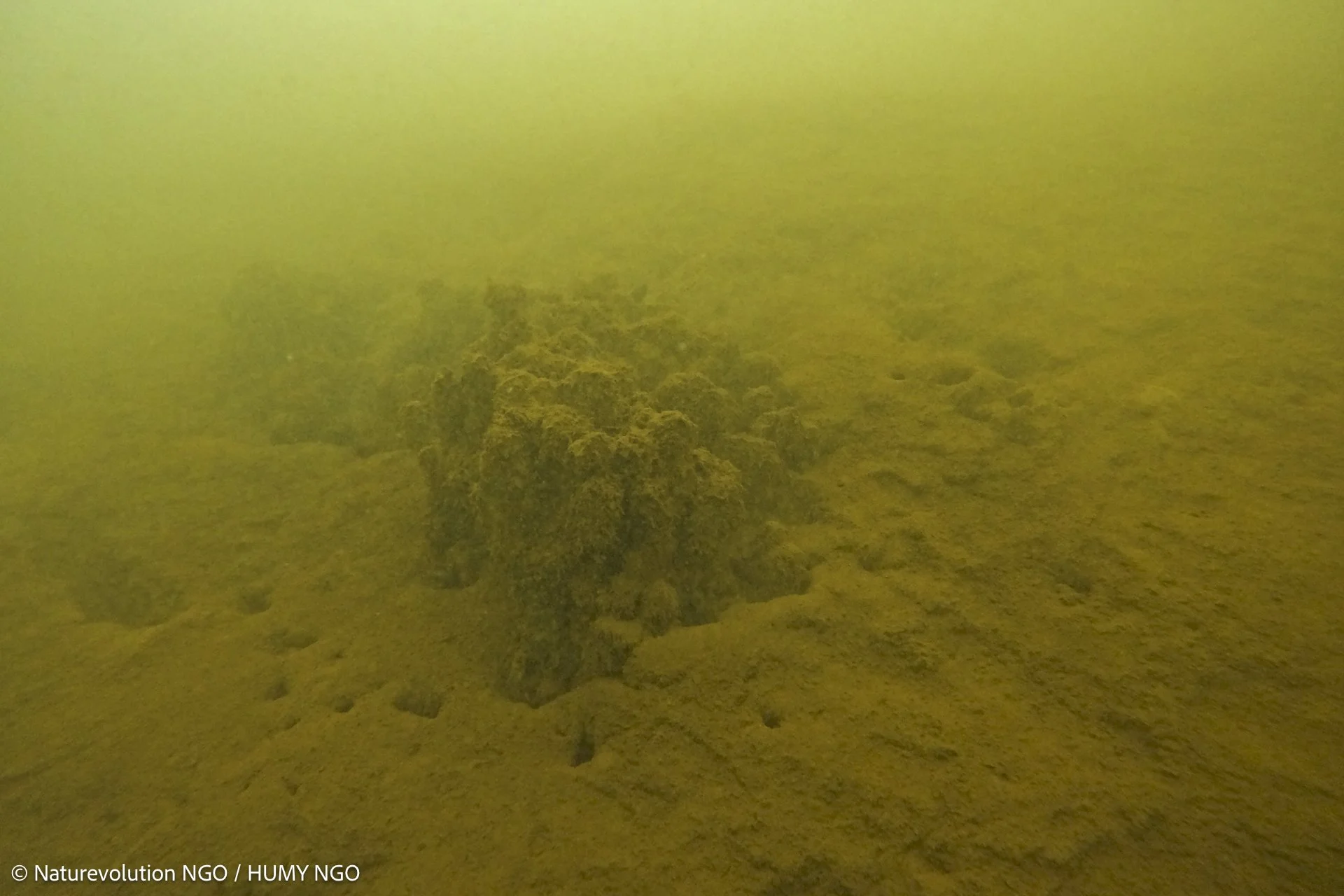
The consequences are catastrophic, with soil erosion and runoff causing pollution and the destruction of coral reefs and marine habitats along the coasts. In the Konawe and North Konawe region, over dozens upon dozens of kilometers of coastline, reefs are being smothered under sediment, with the deposit layer sometimes exceeding 1 meter in thickness. Local residents report that there are almost no fish left.


The bear cuscus (Ailurops ursinus) and the Knobbed hornbill (Rhyticeros cassidix) are two species endemic to Sulawesi classified as "Vulnerable" by the IUCN; both are threatened by the destruction of their natural habitat: tropical rainforest.
Boenaga mining sector (North Konawe / Southeast Sulawesi). In this area, despite its marine protected area status, nearly all marine life has been wiped out. Local communities, like the ecosystems, are suffering.
This ecocide is therefore destroying several major carbon sinks; tropical forests and coral reefs - a hectare of healthy coral reef having an annual carbon storage capacity roughly equivalent to two-thirds of the storage capacity of a hectare of Amazon rainforest…
- in Sulawesi and the Moluccas archipelago, through the destruction of primary forests for ore extraction,
- in Borneo, through the destruction of primary forests for extracting the heavy coal needed to generate electricity for the dozens of refineries,
- in Sulawesi, the Moluccas, and more recently in the Raja Ampat and Flores archipelagos, through the destruction of coral reefs caused by sediment from the mines.
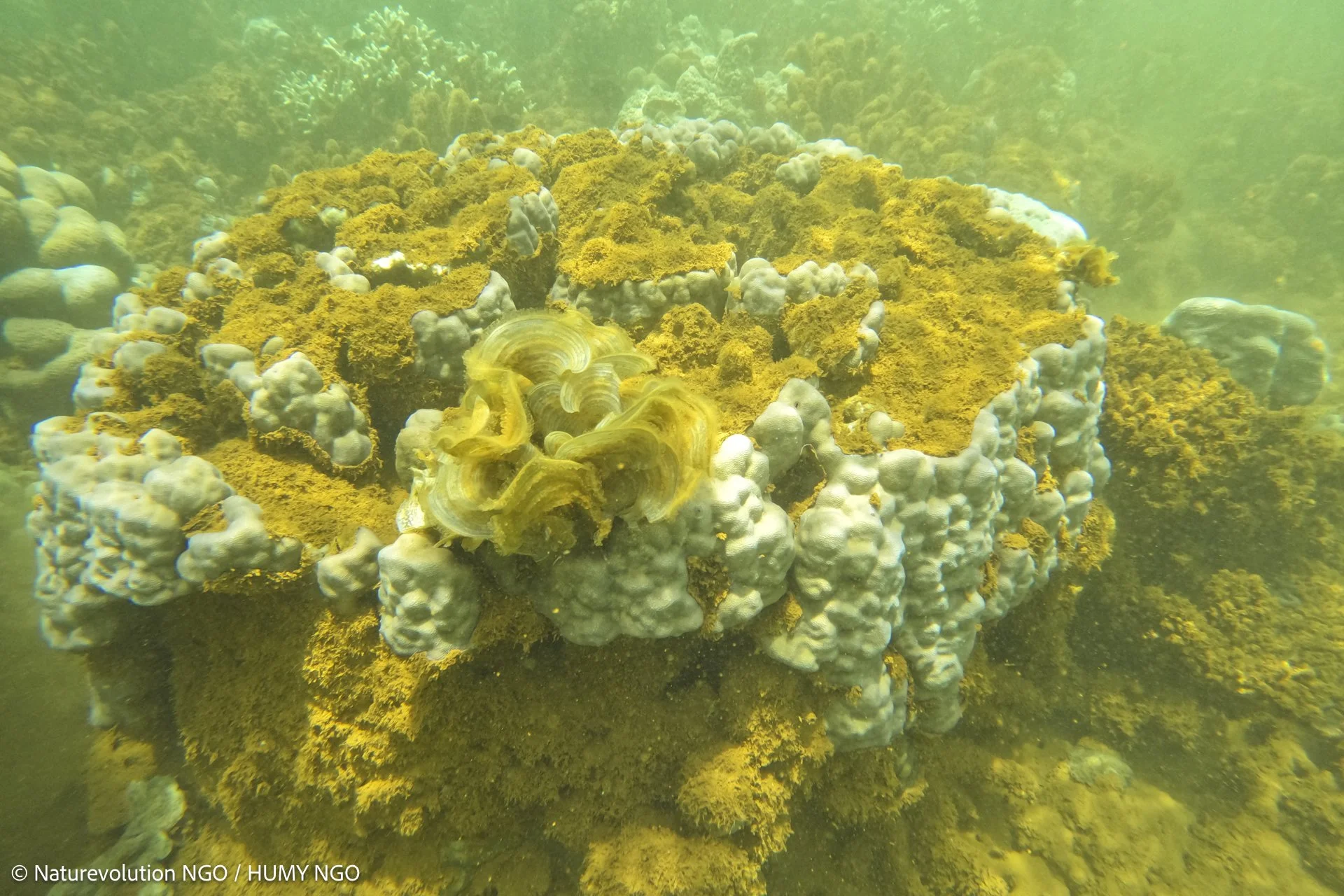

Massive sedimentation along the eastern coasts of Southeast Sulawesi - North Konawe. Sediment laden with heavy metals settles onto corals and sponges, leading, sooner or later, to the total destruction of the reefs.
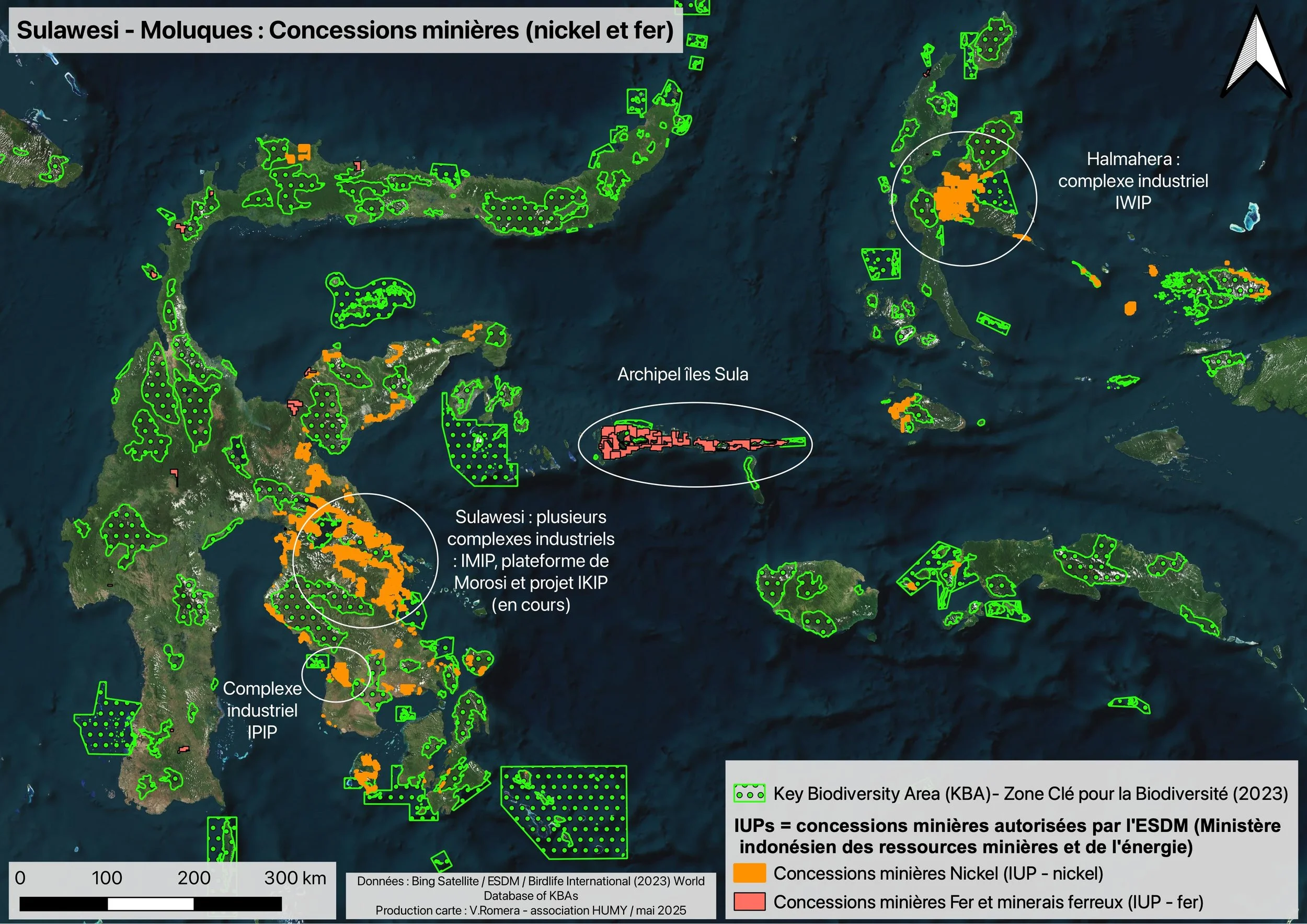
The islands of Halmahera and Sulawesi account for nearly all of Indonesia's nickel production. The Sula Islands archipelago is almost entirely covered by mining concessions dedicated to iron ore extraction. This archipelago is home to a great many strictly endemic and rare species. Sula's IUPs appear ideally positioned midway between the two main nickel sources, likely to supply the stainless steel industry.
TOWARD A EUROPEAN MORATORIUM
The West bears a large share of responsibility for the environmental and human tragedy currently unfolding on the other side of the world. Indeed, the major ecocide generated in Indonesia by nickel production is partly subsidized by European investments in a supposedly more "eco-responsible" mobility. Given the current conditions under which this "critical metal" is produced, it is no longer possible to view electric vehicles as the miracle solution to the necessary environmental transition.
Civil society must be made aware of the hidden side of this transition, and of the ecological and human price to be paid to move away from an economic model enslaved to fossil fuels, if we continue down this path.
Following the example of what the European Union recently put in place with legislation on imports of tropical products linked to deforestation (palm oil, coffee, etc.), it is now urgent to also legislate on nickel, in order to control supply chains and encourage the adoption of better environmental practices.
A moratorium on imports of nickel and its derivatives (stainless steel and batteries), requiring that supply chains meet strict environmental standards and be monitored, is more than necessary.
Unfortunately, this will not save the primary forests of Sulawesi and the Moluccas, but it could significantly reduce the impacts of this ecocidal industry by encouraging the enforcement of existing Indonesian legislation.
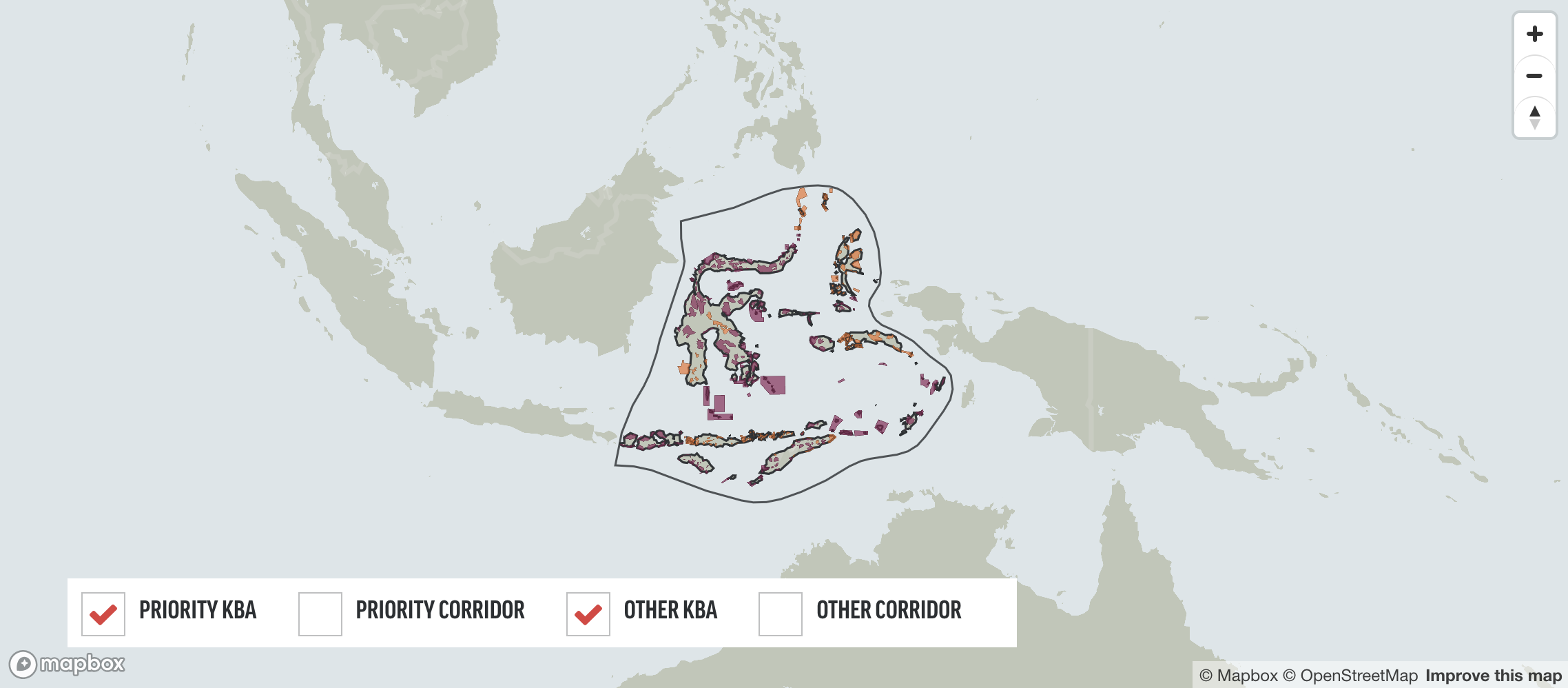
Hotspot Wallacea avec localisation des Key Biodiversity Areas (KBA) concernées : en orange les KBA évaluées comme prioritaires et en magenta les autres KBA. Source : Critical Ecosystem Partnership Fund (CEPF) [1].
An industry that is destroying key forest ecosystems
The forest ecosystems affected by nickel extraction are ultramafic forests. Ultramafic soils, as their name suggests, naturally contain particularly high levels of heavy metals, including the notorious nickel. Ultramafic forests are extremely rare worldwide, and the island of Sulawesi is the region that hosts the most of them. These distinctive ecosystems are home to very special flora and fauna, most of which are endemic species. A study published in 2024 by Dinerstein et al. [2], listing the ecosystems assessed as priorities for halting the collapse of biodiversity and stopping the loss of "irreplaceable biodiversity," identifies Sulawesi's forests as among the most important in the world. And yet these biodiversity hotspots are being turned into vast, barren wastelands.
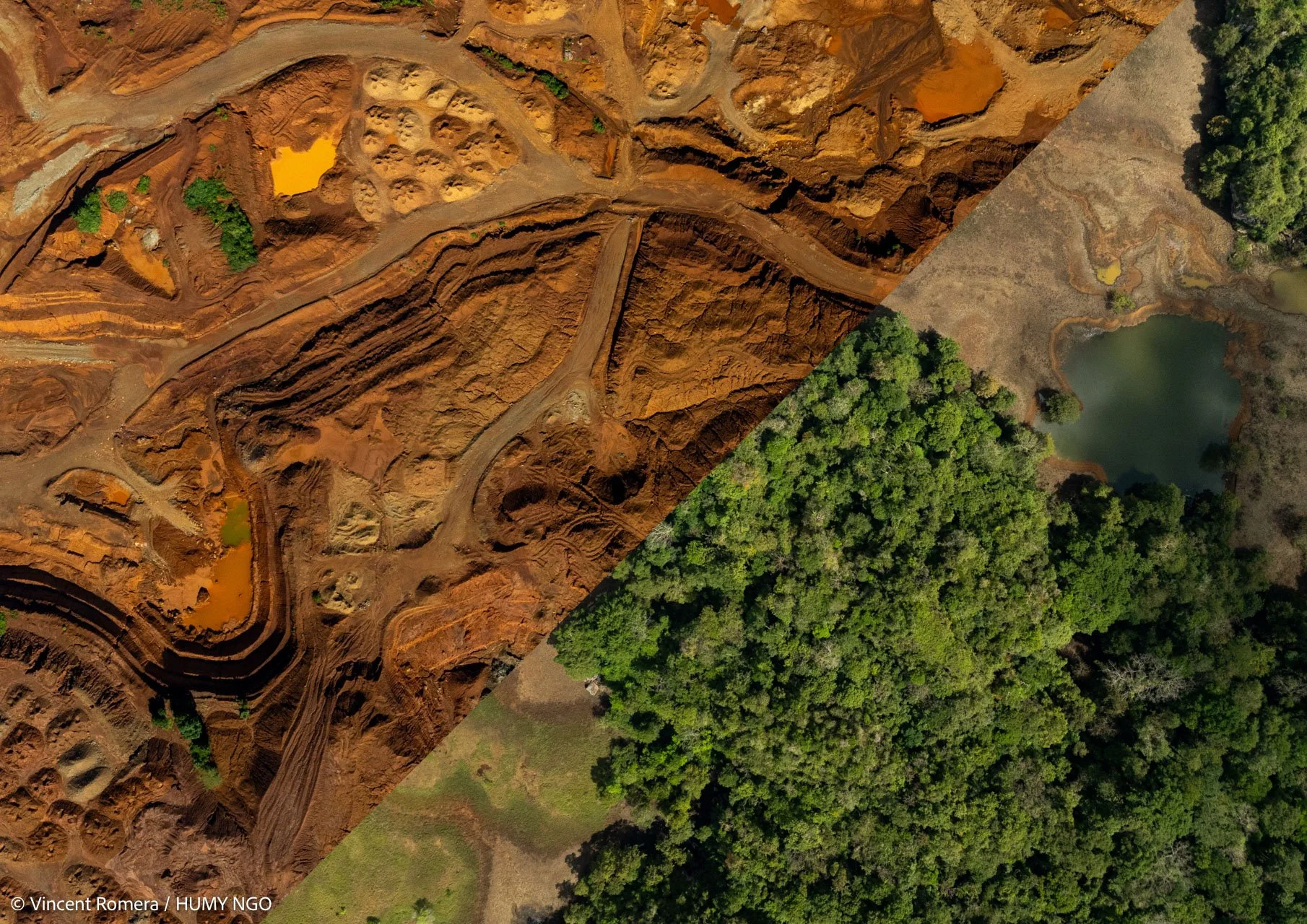

Without intervention, this is a landscape doomed to destruction: ultramafic forests and the wetland associated with the temporary Hiuka lake.
Serious threats to sites unique in the world and to water resources
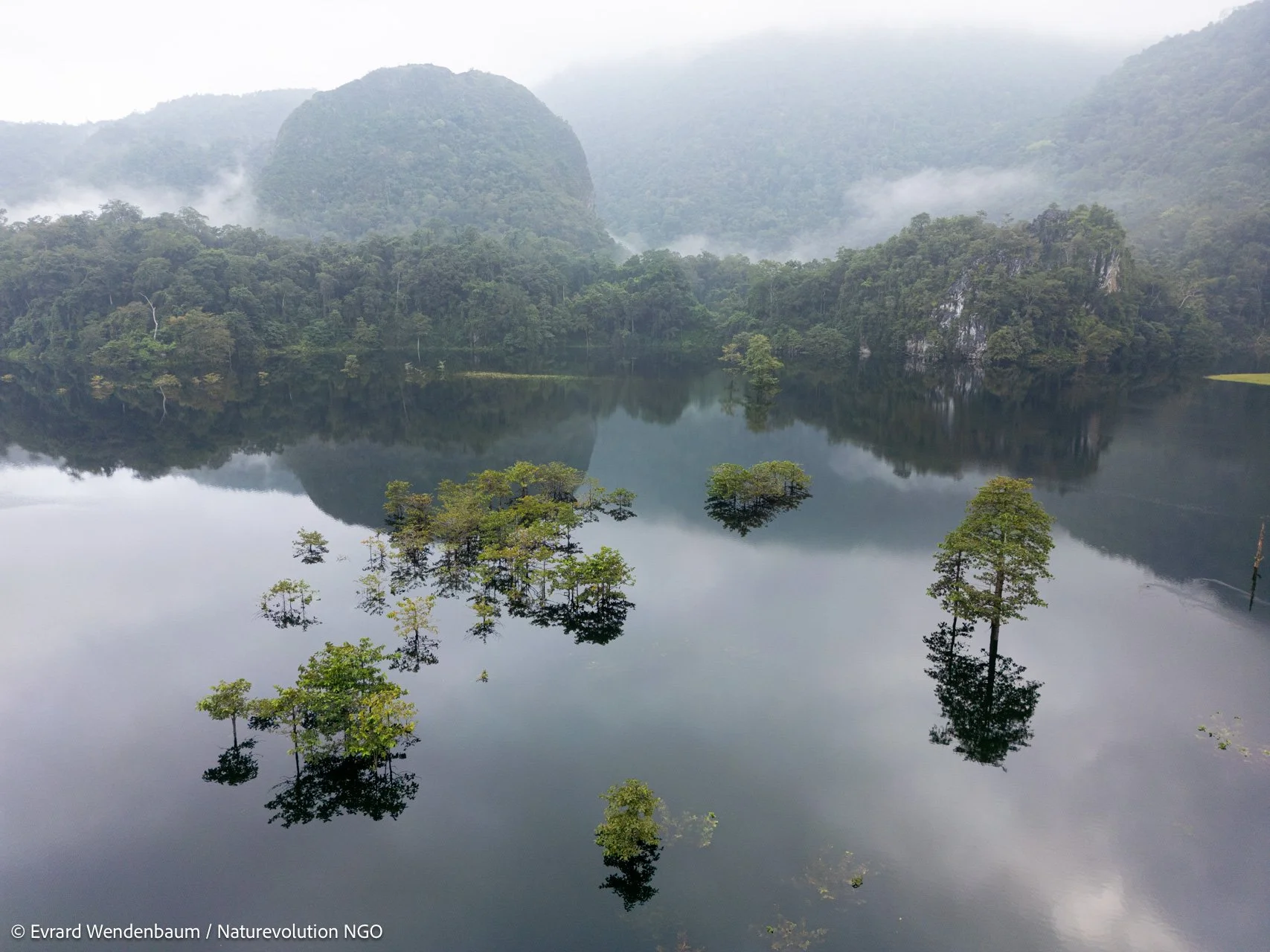
Like the Hiuka wetland, where Naturevolution, HUMY, and Halu Oleo University (UHO) in Kendari organized the first scientific expedition in August 2024, the nickel industry is condemning genuine biodiversity treasures. Indeed, Hiuka, a temporary lake of more than 100 ha that fills and drains over the course of the year, along with its associated wetland, is doomed to disappear if nothing is done quickly. This exceptional ecosystem, which could be considered unique in the world, is now the site of a planned 5,000-ha nickel mine led by the company PT Homkey Inti Prima. Should this mine go ahead, the consequences would be catastrophic for the region's biodiversity and population. Converting a wetland into an open-pit mine would likely create a toxic sludge basin that could contaminate groundwater with heavy metals, which would be disastrous.
Lac temporaire Hiuka en pleine saison des pluies.

In addition to its incredible biodiversity, Hiuka is also an important archaeological site. Numerous ceramics have been discovered there in the caves surrounding the wetland, believed to date back to the Austronesian period (between 3,000 and 4,000 years ago).


Aerial views of the temporary Hiuka lake during the rainy season (left and right photos) and during its natural drainage (center).
A real sword of Damocles hanging over the Coral Triangle
The Coral Triangle is the most biodiverse marine area on Earth, by far! It is home to more than 76% of the world's known coral species and over 37% of known reef fish species. This marine region also hosts 6 of the world's 7 sea turtle species and significant populations of "keystone" species such as whale sharks. Making up more than 30% of all coral reefs on the planet, it has no equivalent anywhere in the world. More than 120 million people live within the Coral Triangle and depend on its coral reefs for their livelihoods. [3]
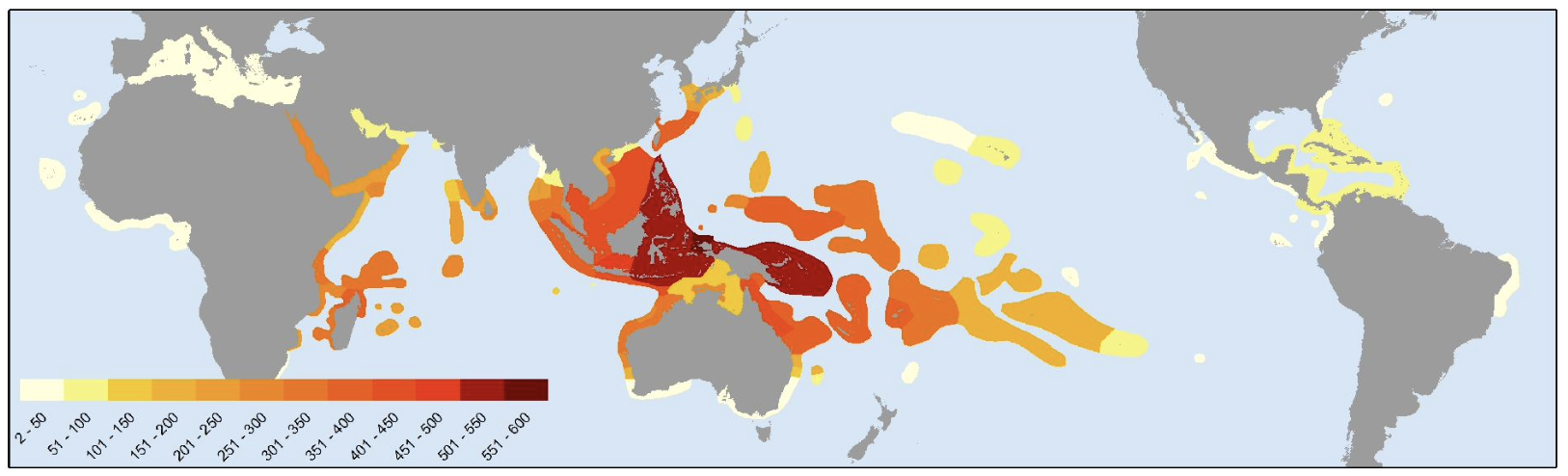
Diversity of reef-building coral species worldwide; the dark red zone (501 to 600 species) corresponds to the Coral Triangle. Source: The Nature Conservancy [4]

Eretmochelys imbricata

Sombori Archipelago - Southeast Sulawesi
Corals have been suffering for many years now from massive bleaching events, a consequence of ocean warming and acidification. Soil runoff from mining areas results in heavy sedimentation and the direct destruction of nearby reefs through smothering of the seabed. Beyond this devastating effect, the sediment also spreads and disperses further out to sea. The numerous barges towed from extraction sites to the refineries also spill material along the way. This increases the amount of matter suspended in the water and, in turn, contributes to raising water temperature.
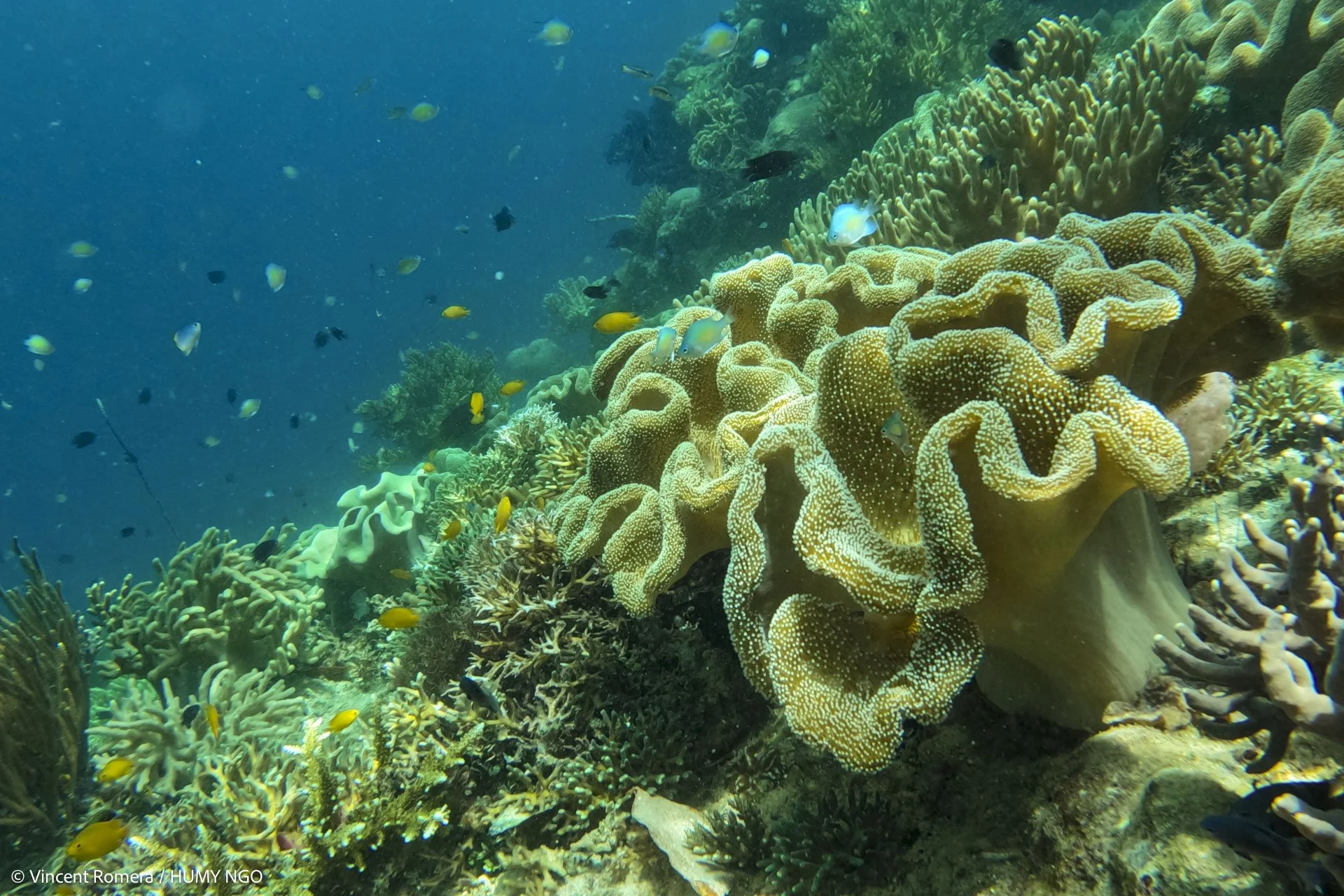
Coral reef in good condition
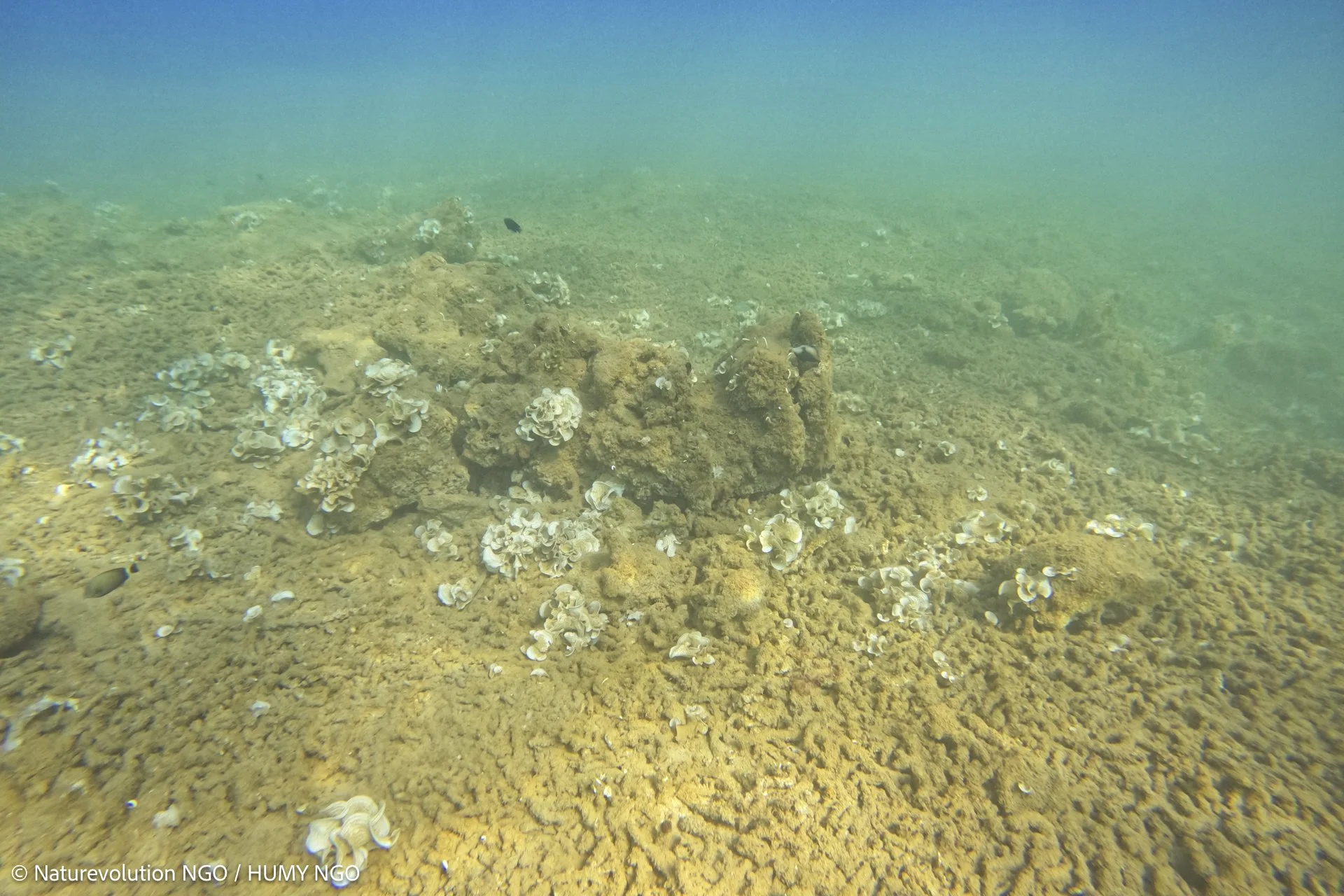
Destroyed coral reef, mining area of North Konawe - Southeast Sulawesi.

Mandiodo mines, owned by PT Cinta Jaya & PT Aneka Tambang TBK, with the fishing village of Tapunggaya on the right. The green color of the water is anything but natural; it is caused by the large amount of sediment suspended in the bay. North Konawe - Southeast Sulawesi, March 2024.
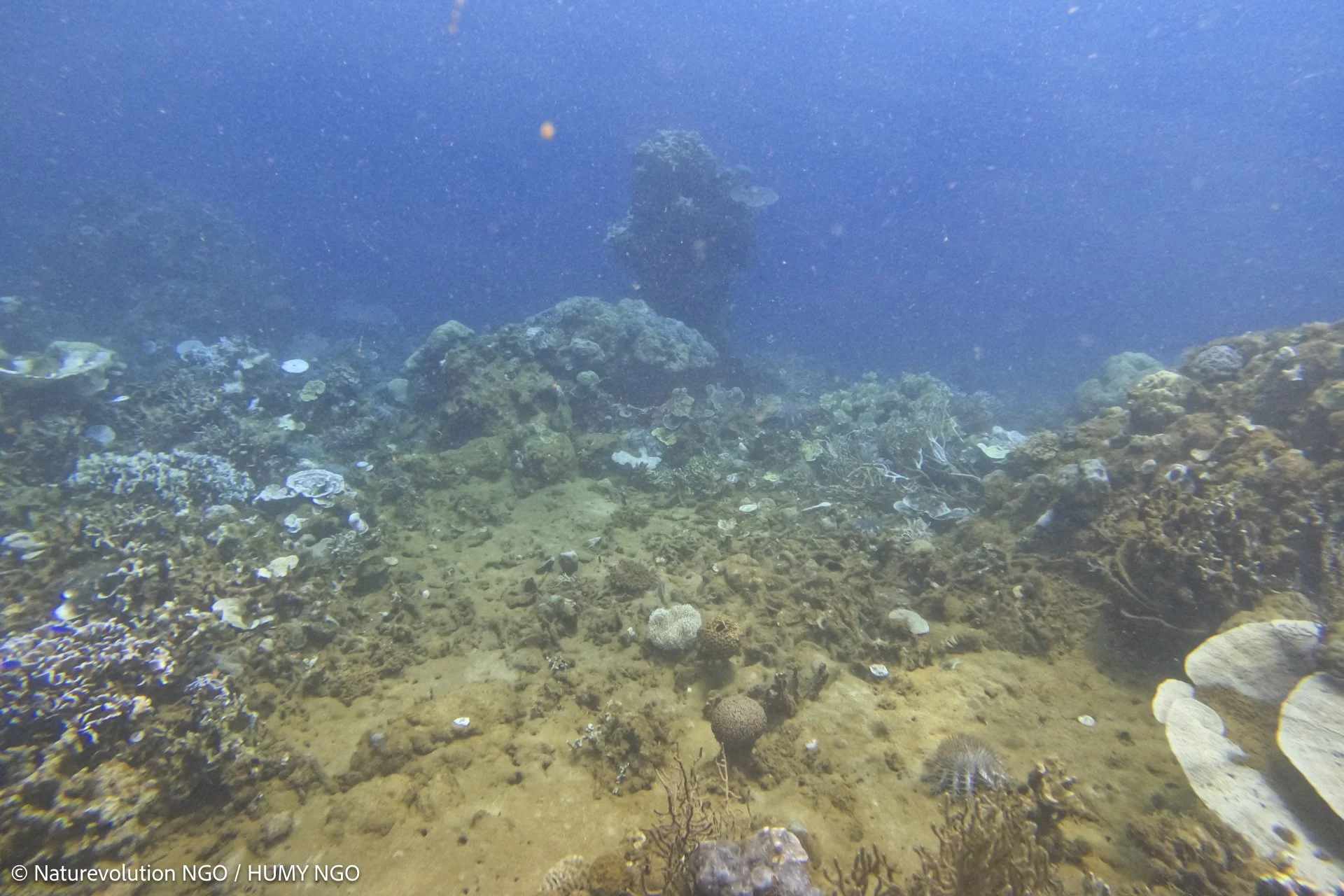
Surprisingly, only a handful of scientific studies have looked at the impact of mining-related heavy metals on corals. Despite the lack of publications, the findings of these studies are alarming: nickel dissolved in seawater "at high concentrations, causes coral bleaching" [5], and "at low concentrations it disrupts reproductive success" [6]; this has been proven at least for corals of the genus Acropora sp. Regarding cadmium, another study shows that at medium to high levels corals bleach [7], and at higher concentrations cadmium can cause coral death [8]. Information is lacking to truly assess the impacts on marine ecosystems of untreated mine effluents. Indeed, if studies are conducted using one or two pollutants at a time, what about a cocktail combining cadmium, nickel, hexavalent chromium, and lead in the same waters? In scientific detail, the question remains open; in terms of visible effects, the reefs are dying and the fish are disappearing…
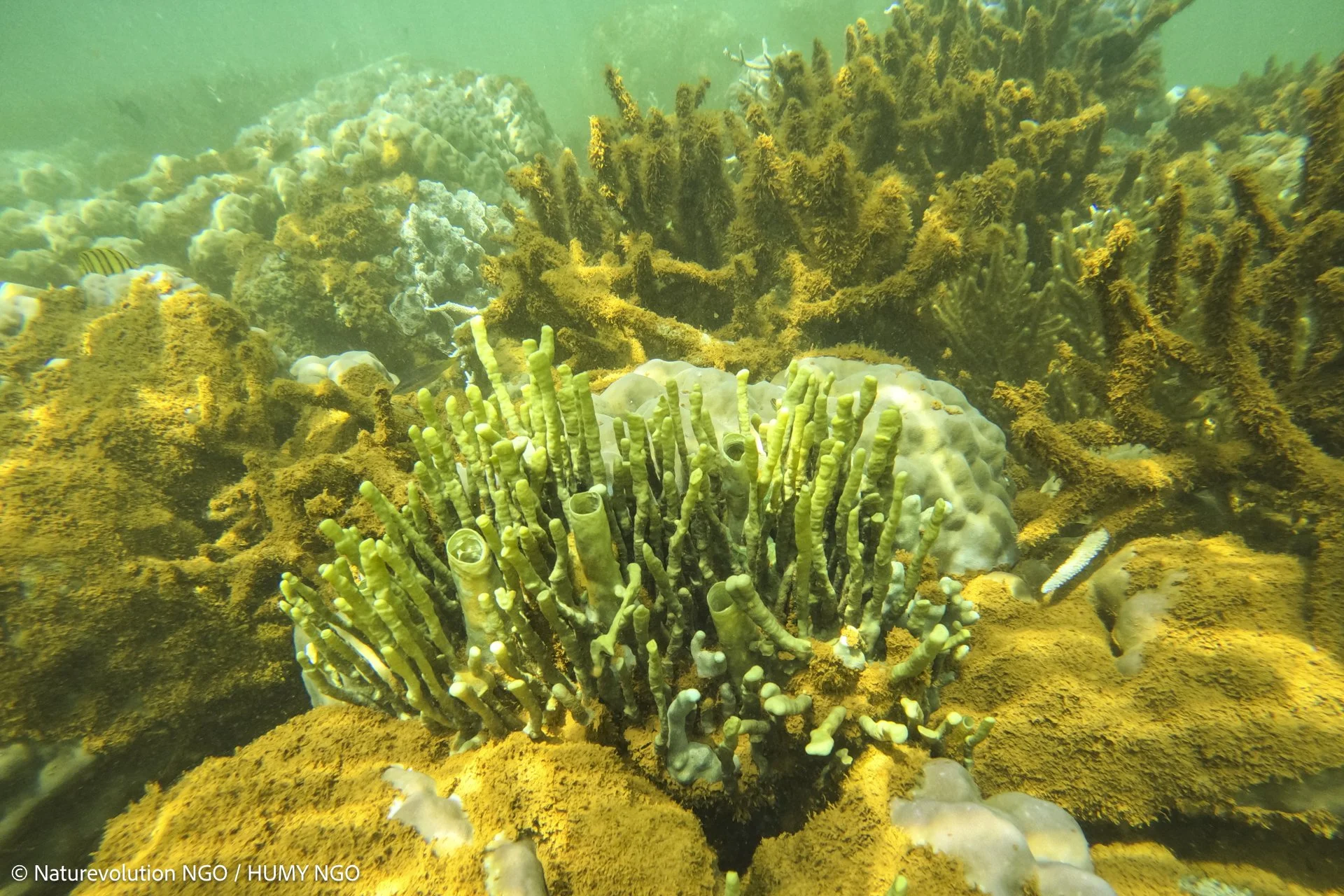

In the photos, orange sediment deposits cover the corals and the seabed. It is appalling to see that the reefs are empty: no fish visible, no apparent life… whereas the suspended sediment particles are clearly visible. Eastern coast of Southeast Sulawesi.
This destruction of the seabed, accompanied by a collapse in fish stocks, has been reported in nearly all areas where nickel mines have opened in Indonesia: Bajau fishing communities all along the coasts of Southeast Sulawesi, as well as in Halmahera. But not only there…
Margaux Maurel, a French researcher, is studying the socio-economic impacts of nickel mines in the Philippines. She has gathered a very large number of testimonies from local communities and NGOs, all pointing to the same finding: a collapse of marine biodiversity following the opening of mines!
Together, the "archipelago states" of Indonesia and the Philippines cover about two-thirds of the Coral Triangle.
Focus on Kabaena Island
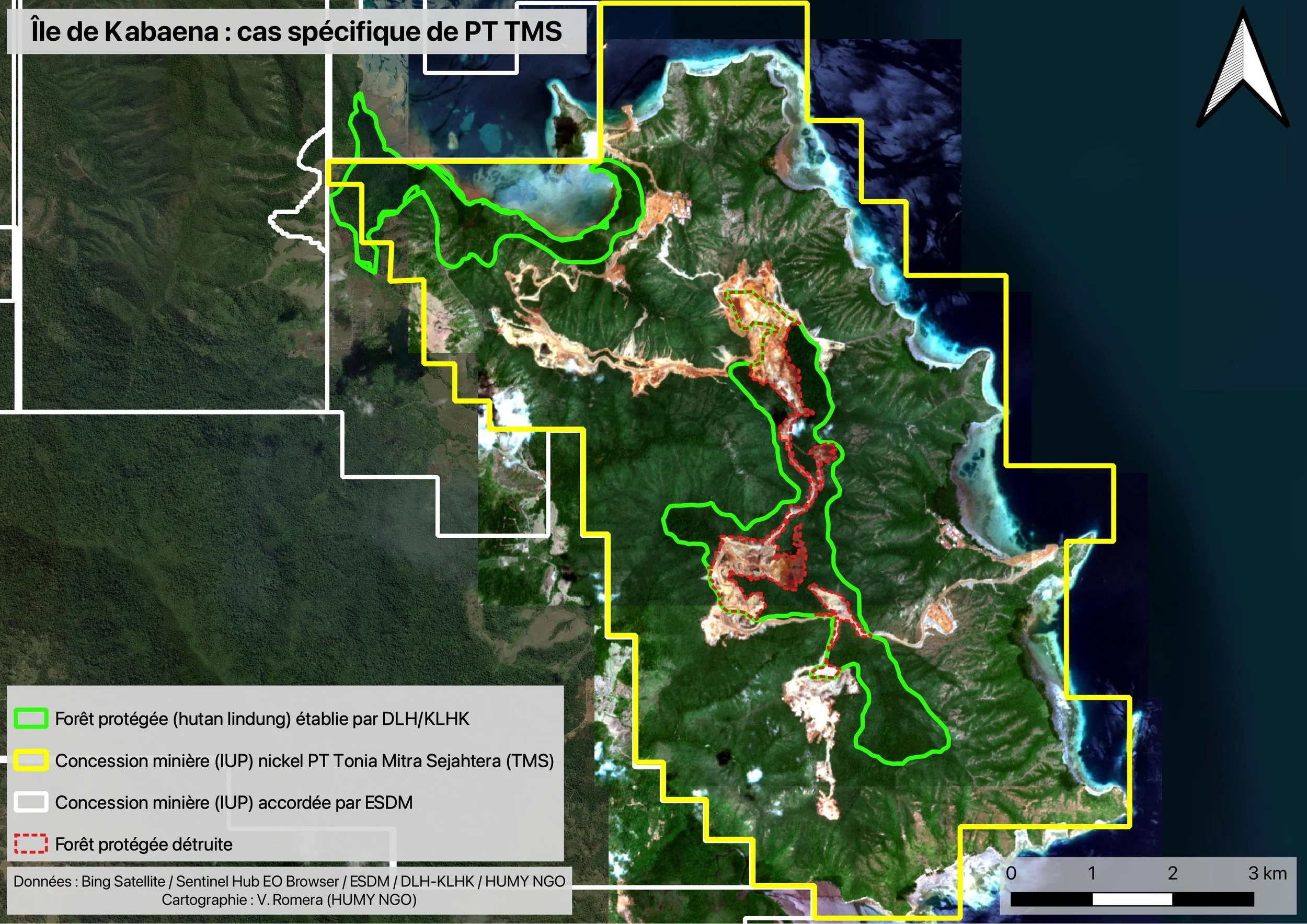
Pulau Kabaena, a small island covering 891 km², lies a few kilometers off the southern tip of Southeast Sulawesi. It is currently covered by mining concessions over more than 73% of its area, the vast majority of which concern nickel. Yet Indonesia's law on the management of coastal areas and small islands (Law Number 1 of 2014 on the Management of Coastal Areas and Small Islands - Law No. 1/2014) prohibits all extraction activities on islands smaller than 2,000 km².
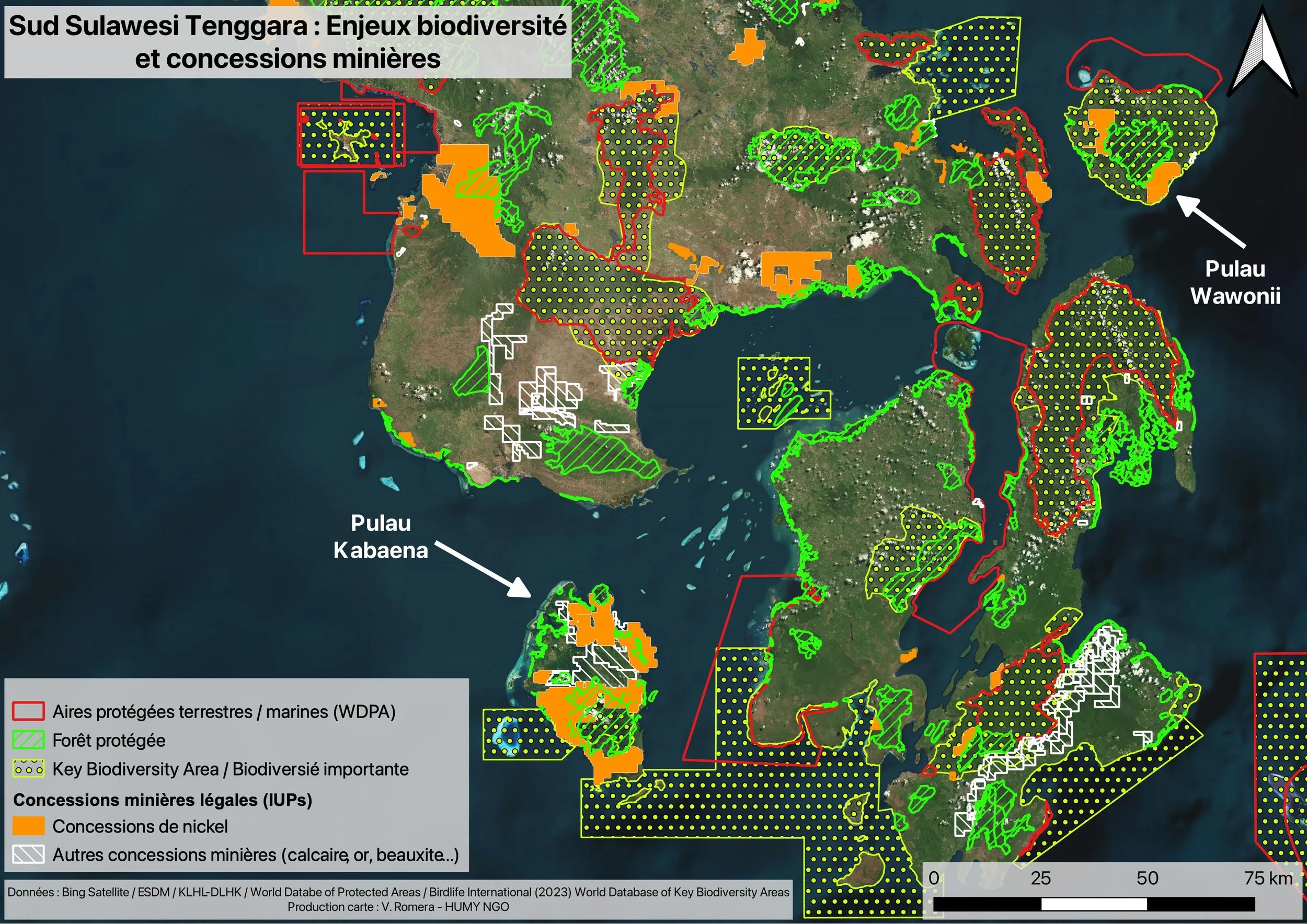
One of these nickel concessions, owned by the group PT Tonia Mitra Sejahtera (PT TMS), whose activity is already illegal, is also clearing a forest protected under Indonesian law. As of October 2024, the mining operator had already destroyed 164 of the 540 ha of this protected forest (see map below). PT TMS is also accused by local residents of polluting the water supply, since the concession is located on Mount Sabanano, the source of several rivers that provide drinking water to several thousand people.
Satya Bumi's teams have revealed concentrations of nickel, sulfate, cadmium, mercury, and lead that are 200% to 7,000% above the thresholds considered acceptable for marine and river aquatic ecosystems. Also as part of this NGO's independent studies, ecotoxicological analyses of mollusks were carried out. Here too the results are appalling, with nickel levels reaching 43 to 96 times the limits set by the World Health Organization. [9]
Thanks to investigative work by the NGO Satya Bumi, the supply chain into which PT TMS's ore production feeds is now known. The company Sulawesi Mining Investment (SMI), which owns smelters using so-called "High-Pressure Acid Leach" (HPAL) technology, produces enriched nickel, "Mixed Hydroxide Precipitate" (MHP), and "Mixed Sulfate Precipitate" (MSP), components needed in the manufacture of battery cathodes.

Supply chain from mining company PT TMS to automakers. Source: Satya Bumi - 2024
PT TMS thus supplies major Western automakers such as PSA, BMW, VW, Tesla, GM, Ford, Volvo, and Daimler / Mercedes-Benz, the Japanese groups Toyota and Honda, as well as 11 Chinese groups. Between the smelters and the automakers sits a key intermediary: the battery manufacturer — in this case, the two giants of the sector, Samsung SDI and CATL, which produce batteries for most Western firms.
The runaway proliferation of mines, especially in coastal areas, the undersizing or absence of retention/settling basins, the failure to rehabilitate sites after mining, massive soil runoff during the monsoon season, and the often "unregulated" industrial discharges from refining complexes are all worrying factors that suggest the worst may be yet to come.
If nothing is done to try to curb the ecocide linked to nickel, the loss of all or part of the Coral Triangle appears to be a scenario that must be taken seriously.
Références :
https://www.cepf.net/our-work/biodiversity-hotspots/wallacea
Dinerstein E., Joshi A.R., Hahn N.R., Lee A.T.L., Vynne C., Burkart K., Asner G.P., Beckham C., Ceballos G., Cuthbert R., Dirzo R., Fankem O., Hertel S., Li B.V., Mellin H., Pharand-Deschênes F., Olson D., Pandav B., Peres C.A., Putra R., Rosenthal A., Verwer C., Wikramanayake E. et Zolli A., 2024. "Conservation Imperatives : securing the last unprotected terrestrial sites harboring irreplaceable biodiversity". Front Sci (2024) 2:1349350.
Coral Triangle Facts, Figures and Calculations: Patterns of Biodiversity and Endemism, December 2008 compiled by The Nature Conservancy.
Megan L. Gillmore, Francesca Gissi, Lisa A. Golding, Jenny L. Stauber, Amanda J. Reichelt-Brushett, Andrea Severati, Craig A. Humphrey & Dianne F. Jolley, 2020. Effects of dissolved nickel and nickel-contaminated suspended sediment on the scleractinian coral, Acropora muricata. Marine Pollution Bulletin
Volume 152, March 2020. https://doi.org/10.1016/j.marpolbul.2020.110886
Francesca Gissi, Jenny Stauber, Amanda Reichelt-Brushett, Peter L. Harrison & Dianne F. Jolley, 2017. Inhibition in fertilisation of coral gametes following exposure to nickel and copper. Ecotoxicology and Environmental Safety
Volume 145, November 2017, Pages 32-41 https://doi.org/10.1016/j.ecoenv.2017.07.009
Zhi Zhou, Xiaopeng Yu, Jia Tang, Yibo Wu, Lingui Wang & Bo Huang, 2018. Systemic response of the stony coral Pocillopora damicornis against acute cadmium stress. Aquatic Toxicology Volume 194, January 2018, Pages 132-139 https://doi.org/10.1016/j.aquatox.2017.11.013
Carys L. Mitchelmore, E. Alan Verde & Virginia M. Weis, 2007. Uptake and partitioning of copper and cadmium in the coral Pocillopora damicornis. Aquatic Toxicology Volume 85, Issue 1, 15 November 2007, Pages 48-56 https://doi.org/10.1016/j.aquatox.2007.07.015
Dhany Alfalah, Sayyidatiihayaa Afra & Didi Hardiana, 2024. How the Nickel Rush Ravaged Kabaena Island and the Bajau People’s Livelihood. Satya Bumi - Report 64p https://satyabumi.org/report-nickel-rush-kabaena-bajau/